Five weeks, five bridges, and one lesson: bridges can only bear witness. They cannot compromise, cannot learn, cannot give something up for the sake of connection. Only we can do that. The final part of a series on bridges, on Election Day.
Bridges. A flurry of them, all teaching Ryrie and me, provoking thought, eliciting introspection. So much history, beauty, tragedy, hope and horror. In my head, thoughts swirled, foundational notes and ideas from each:
At the Latin Bridge, stone stood strong but a metaphorical bridge was broken.
Stari Most saw bridges of stone and spirit collapse together; the stone was rebuilt, but its psychological connection is a work in progress.
Srebrenica saw the essential bridges of law and custom, ethics and morality, utterly shattered, the systematic horror that followed, and glimmers of hope straining to rebuild the foundations.
In Višegrad we walked the Ottoman creation that endured everything and yet could prevent nothing, its bastion of stone powerless in the face of human inhumanity.
And on the Tara we walked a bridge born to connect, deliberately broken to protect, then rebuilt and connecting once more.
Ryrie and I crossed many more bridges as we wove through the Balkans and toward home. Some were Ottoman, some Yugoslav brutalist, some modern feats of engineering; some were large and some small. But it was the metaphorical bridges we encountered in the final stretch of our travels that made the biggest impact.
In Montenegro, we spoke at length with good friends about its 2006 referendum. After the senseless tragedy of the Yugoslav wars, Montenegro voted for independence from the State Union of Serbia and Montenegro. Not a shot was fired, and while not all Montenegrins (or Serbs) were in favor of the split, it was done legally, following law and custom: law required an independence vote to get 55%, and 55.5% of voters were in favor. The 44.5% who disagreed? They accepted the result.
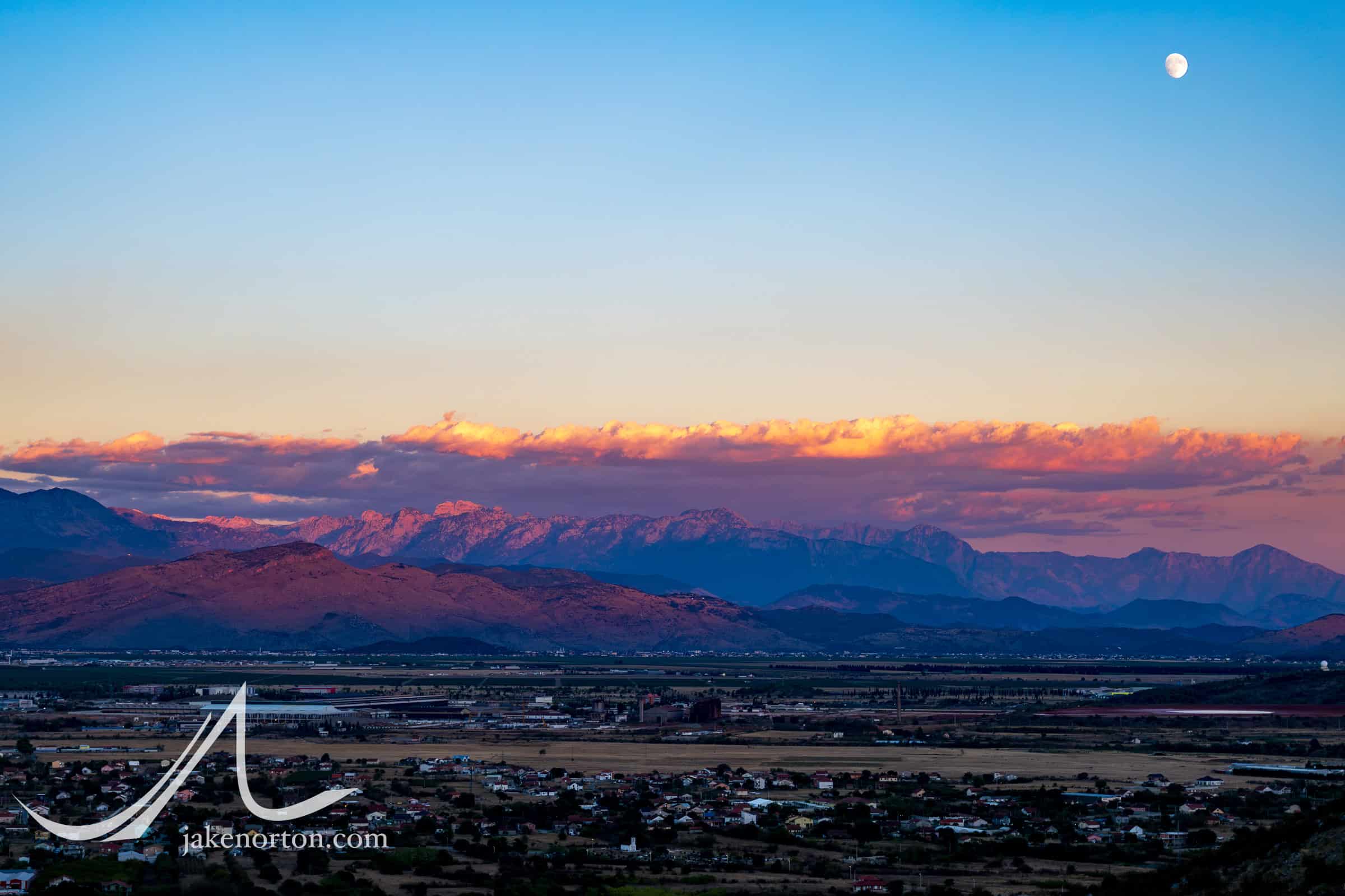
Evening over Podgorica, Montenegro, a country that voted its way to independence in 2006 without a shot fired.
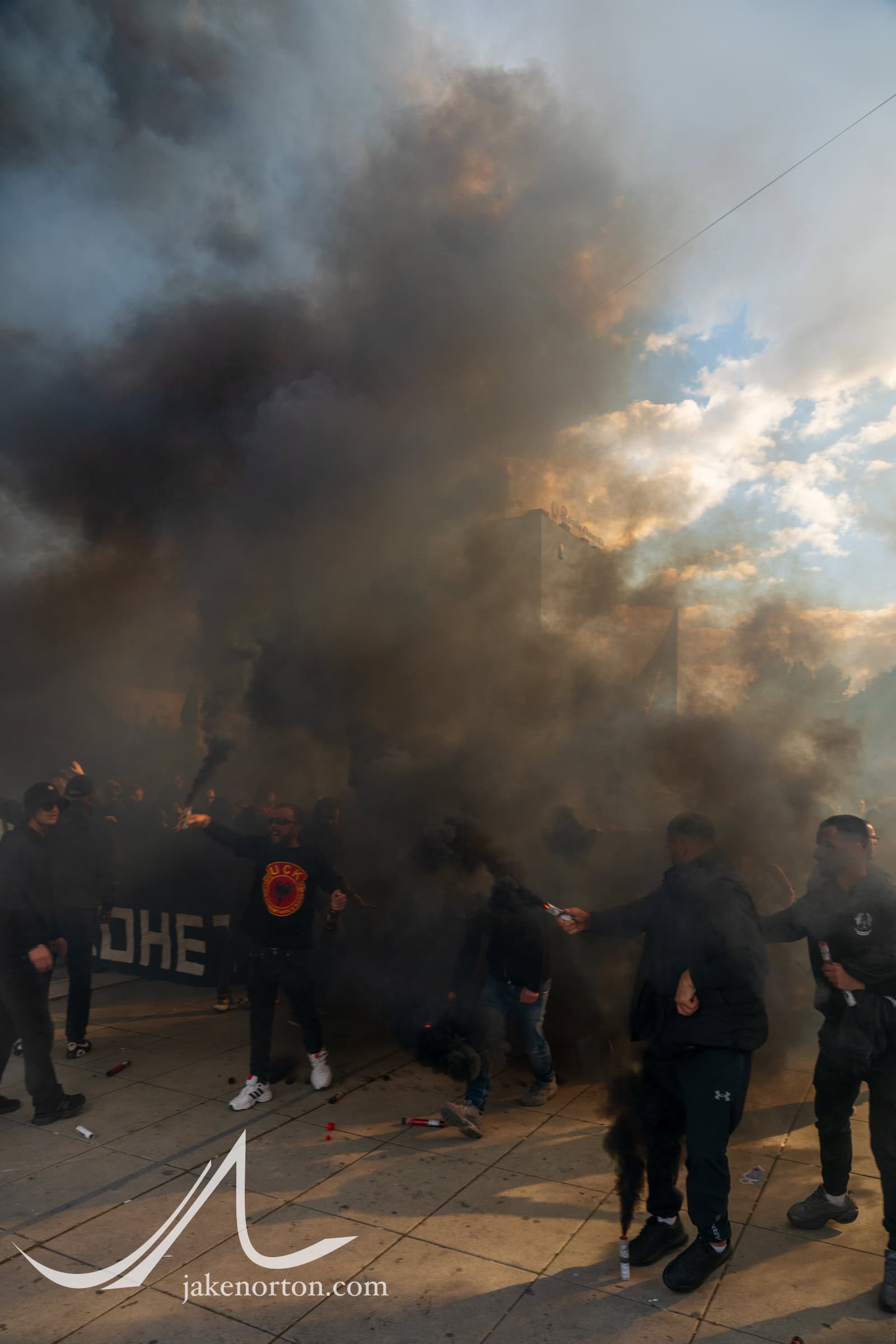
Crossing the mountains into Kosovo — which declared independence in 2008 — we ran headlong into broken bridges in the capital, Pristina. Smoke choked the downtown air as angry protesters chanted “U-Ç-K! U-Ç-K!,” clenched fists raised high in defiance. The protests stemmed from conviction a week prior of former Kosovo president, Hashim Thaçi, of war crimes by the Kosovo Specialist Chambers and Specialist Prosecutor's Office; he was sentenced to 25 years in prison. The protests brought us back to sights in Republika Srpska — a semi-autonomous Bosnian Serb region of Bosnia and Herzegovina — when we passed a memorial procession for Ratko Mladić — who had died in detention weeks earlier in UN custody in The Hague — locals holding their hands in the three-finger salute next to his portrait. One side’s war criminal is often another side’s hero; true connection requires compromise, understanding, and a raw digestion of fact.
Protesters with smoke flares in central Pristina, September 2026, days after former president Hashim Thaçi was sentenced for war crimes.
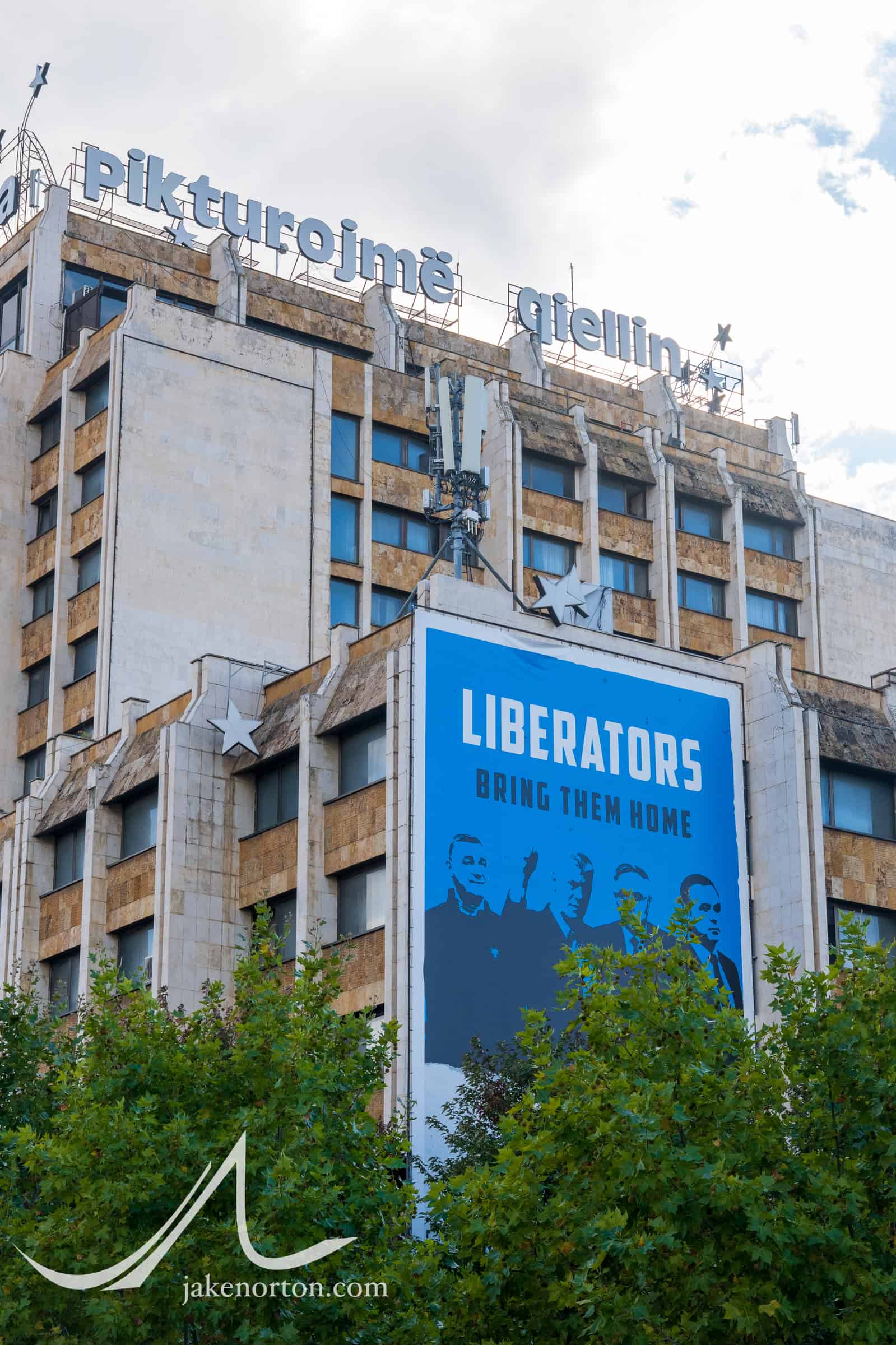
“Liberators: Bring Them Home,” a banner for the convicted former KLA leaders, central Pristina.
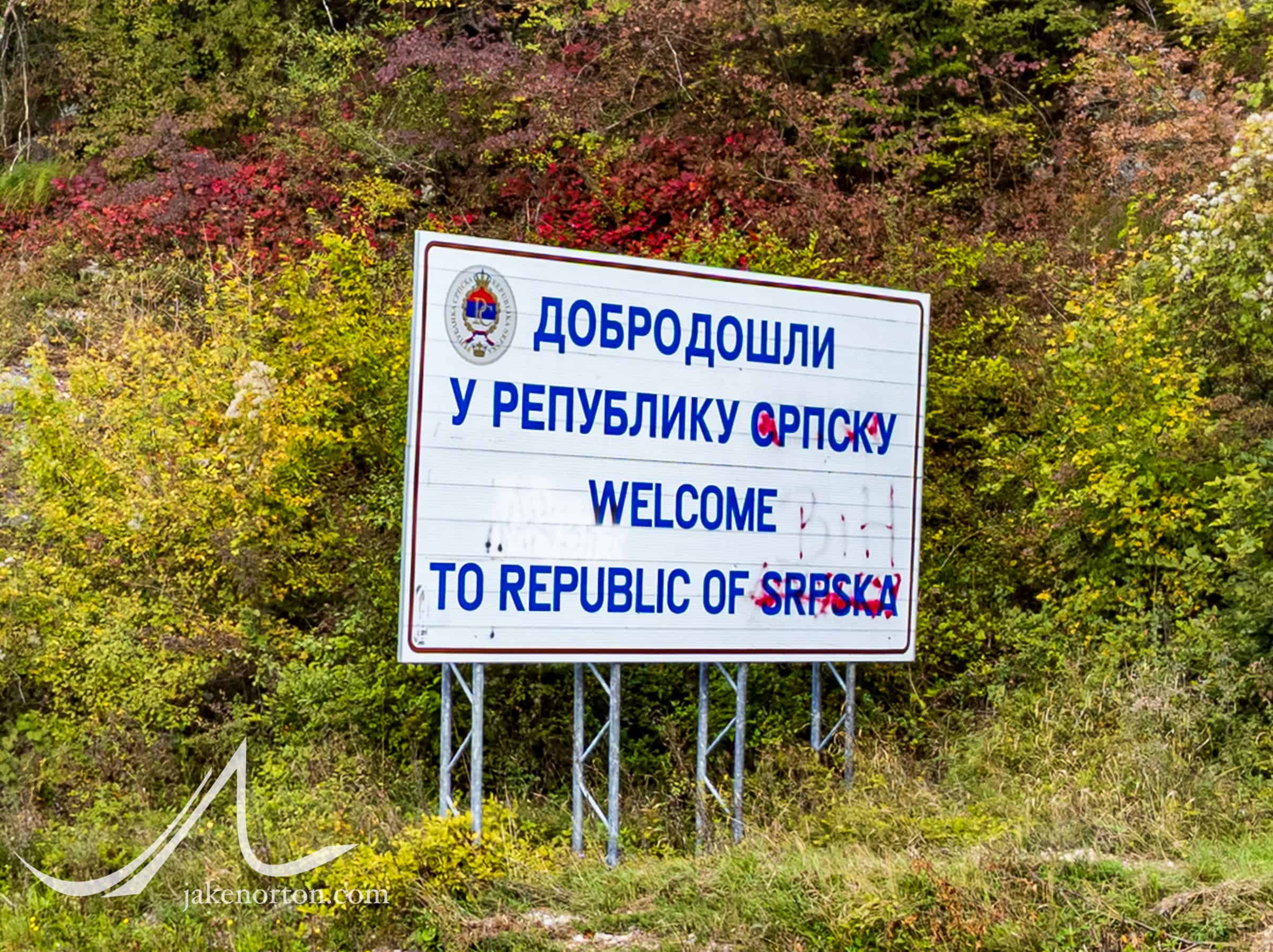
Entering Republika Srpska, one of Bosnia and Herzegovina’s two entities. Someone has defaced the name.
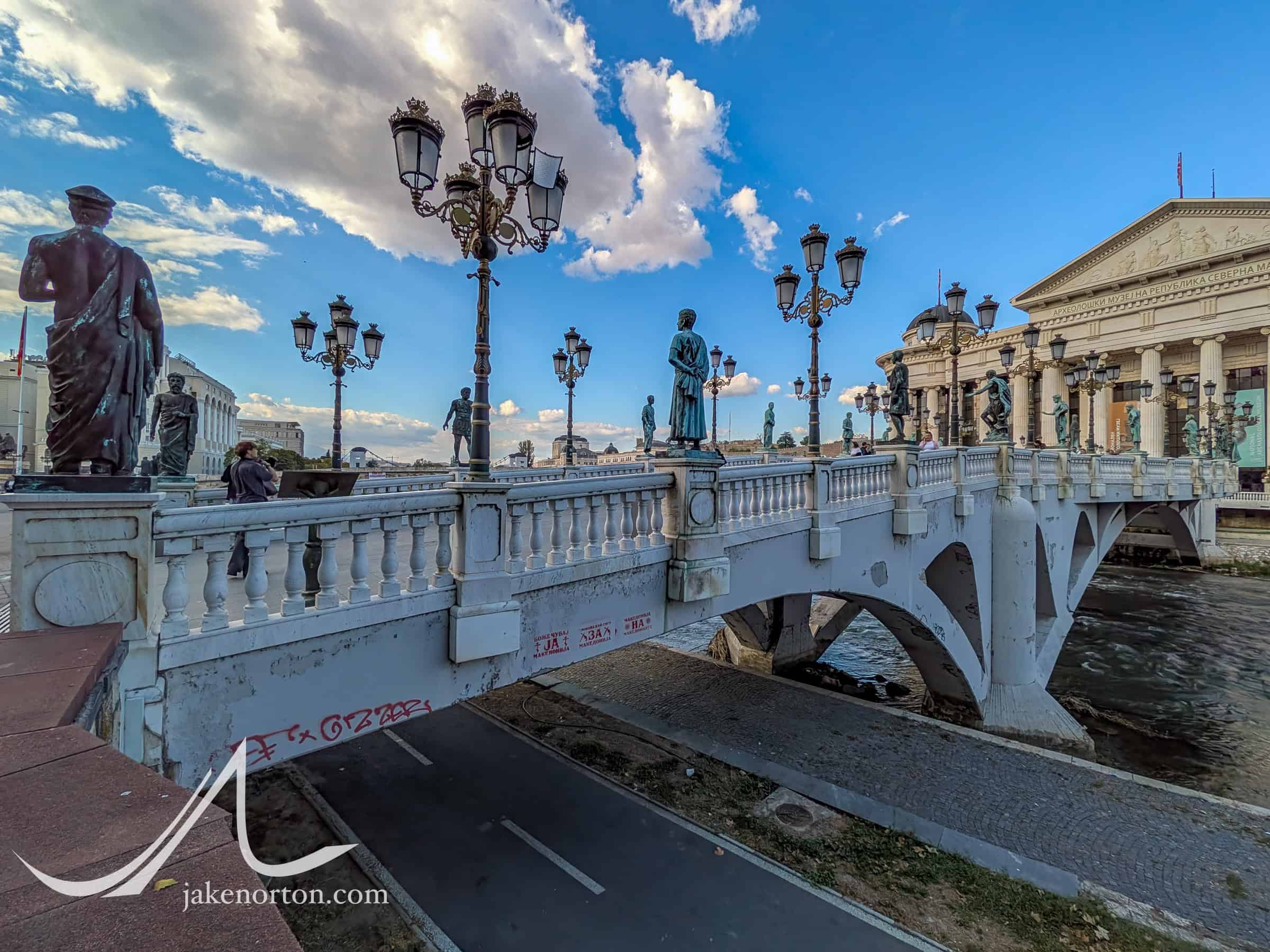
Further on, in Skopje, North Macedonia, we ran into some of the strangest bridges of division. In the center of the city, a 15th century Ottoman bridge sits on Roman foundations and spans the Vardar River, connecting the new Macedonia Square to the Old Bazaar. Throughout the Square, one feels trapped in a time warp: Towering, ancient-looking statues of Alexander the Great, Justinian I, Samuel of Bulgaria, and more punctuate the place, but none are ancient, or even very old. They were constructed under the 2010–2014 ‘Skopje 2014’ project to promote Macedonian national identity — perhaps at the expense of the prominent Albanian minority. But looking past the kitsch of 2014, there was real and meaningful bridge building at the same time. After decades of disagreement between the then-Republic of Macedonia and Greece over the name of the former, both sides came to the table in 2018 and signed the Prespa Agreement; everyone gave something up, and got something in return — a true compromise and bridge building.
A Skopje 2014 bridge lined with bronze figures from antiquity. Behind it, the museum now bears the name agreed at Prespa: North Macedonia.
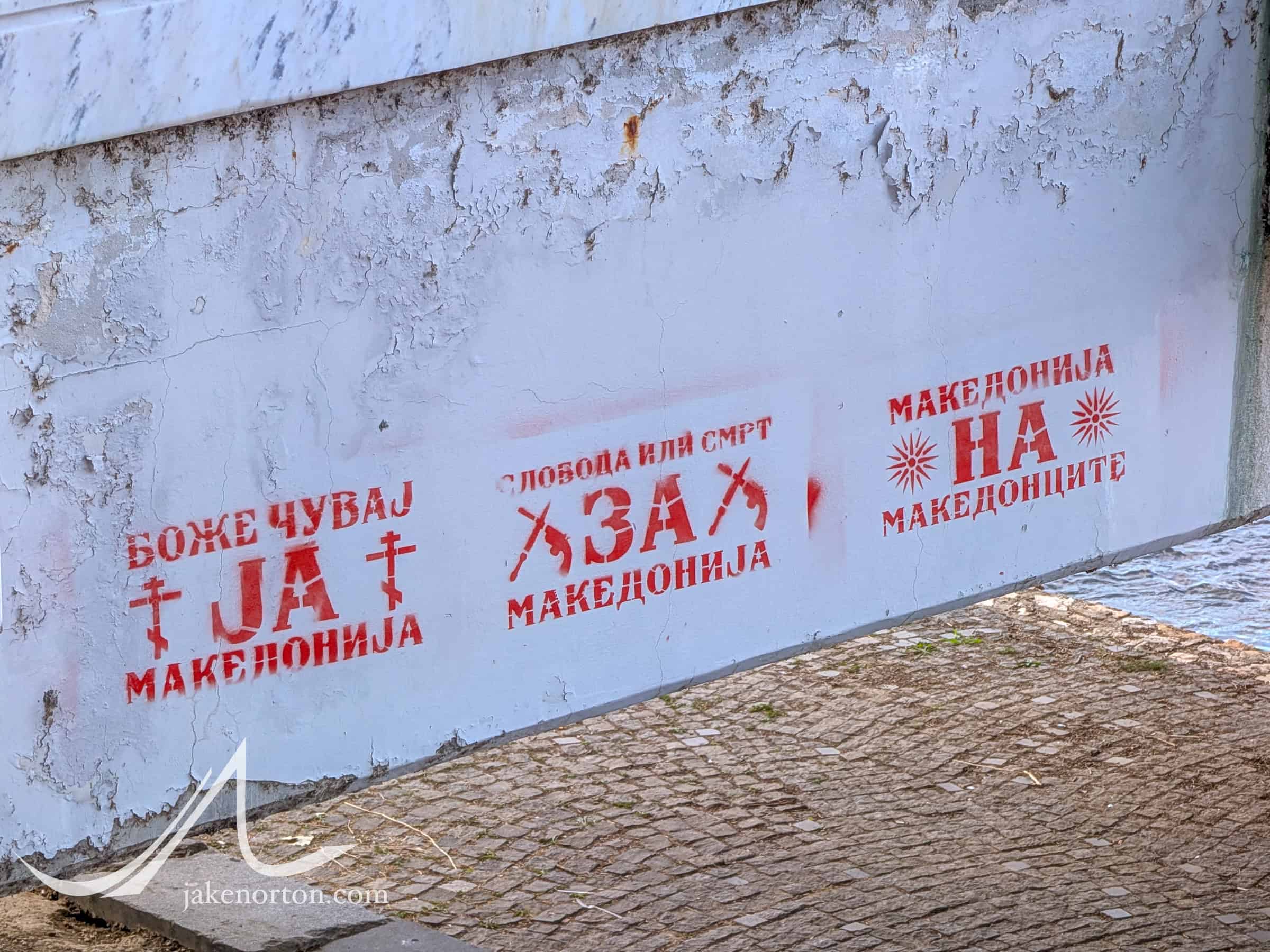
Stenciled on the bridge: “Macedonia for the Macedonians.”
Five weeks in the Balkans, and in a matter of hours Ryrie and I were touching down in Denver, back home to a nation confronting critical bridges of its own.
I’ve spent the past few weeks reflecting on our time in the Balkans, and the one lesson I’ve distilled from the bridges we crossed and those we experienced is this: Bridges, for all their grandeur and solidity and practicality, can do nothing but bear witness. They cannot learn, compromise, acknowledge the past and prepare a path to the future. They cannot understand, weep or mourn or celebrate or salute. They simply stand, offering a path from one place to the next; only we can do the rest.
In our country today, I see a deep and profound need for bridges, for connection. We have neighbors who won’t speak to one another; families broken along lines of red and blue; mongers of fear casting doubt on fact and bending norms of custom, law, morality; sides retreating into thought silos, the chasm between widening daily.
To be clear, we are not Yugoslavia in 1990. We have a far different history, institutions, and current circumstances. But the comfortable notion that “it won’t happen here” is an insidious one. Of the many friends I’ve spoken with who lived through the wars in the former Yugoslavia, none foresaw what was to come. There were problems, for certain, but outright war, genocide, hundreds of thousands killed or displaced? It was unimaginable. An academic paper by Sreca Perunović1 — based on polling done in Yugoslavia in 1990-91 - bears this out. She cites polls in Bosnia that showed “overwhelming majorities (in the range of 70–90%) [were] against… an ethnically divided republic,”2 adding that this “might help to explain the astonishment many felt in the 1990s concerning the eruption of war.”3 The paper continues to emphasize that ethnic hatred and ethno-nationalism in 1990 were not — even in ethnically diverse Bosnia — a strong force, but in the 1990s politicians created a situation where “nationalism [was] suddenly rediscovered,”4 and that “…the problem was not that different people [in Yugoslavia] could not live together, but that they were not given a chance.”5
“It won’t happen here” is exactly what most Yugoslavs believed.
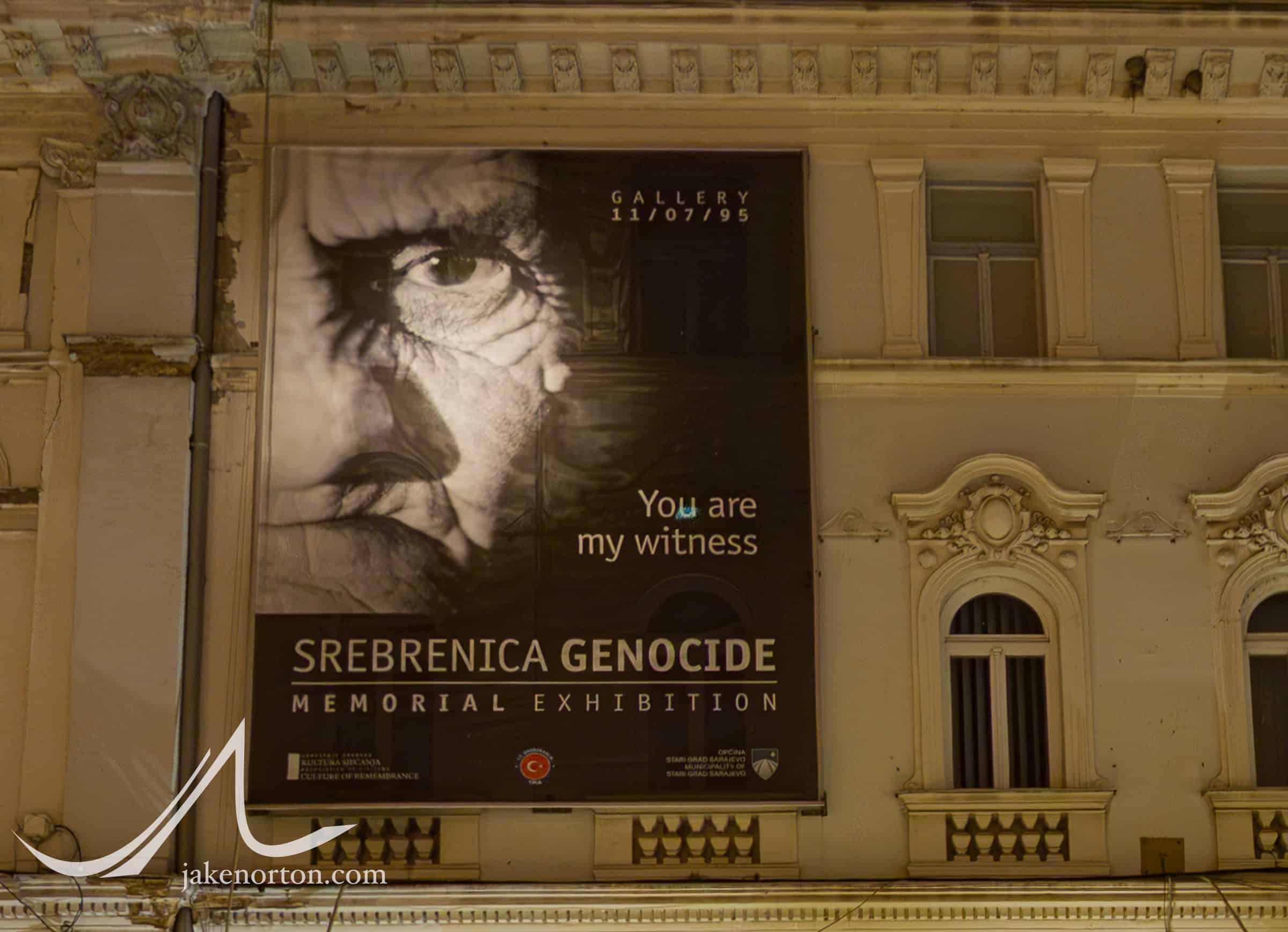
Sarajevo, 2026: a banner for the Srebrenica Genocide Memorial Exhibition. “You are my witness.”
Bridges rarely collapse all at once: they crack first, hairline fractures and points of weakness — easy to miss and easy to dismiss. Left alone, they can spread into a cataclysm; noticed, inspected, and repaired, damage can be mitigated.
I believe we’ve got cracks in our metaphorical bridges here in the USA, those essential structures that have held fast for two-and-a-half centuries. We need to fix them, and to do that we need to find our inner engineer, the Jauković in each of us: someone who knows the structure well enough to see where it’s failing, who breaks only so much as is necessary to protect, and who always allows for future restoration. And we need to leave room for the menders: the Antes who find the courage to cross, and the Mirsads who come home and rebuild.
As we cast our votes today, some things are certain: we may not know the outcome for days; none of us can control that outcome; and some of us (all of us?) will lose something in the end. Those are the certainties. And in the delicate aftermath of this election, we will all have a choice: allow division to continue, or connect. Raise an angry fist in vilification of the other, or seek the commonality and community so easily lost.
Turkish novelist Elif Shafak read The Bridge on the Drina in high school. Decades later, in the New Statesman, she wrote about the impact it had on her:
I had to rethink what I thought I knew. I had to unlearn. What Andric’s novel did for me at that young age was to shake years of nationalistic education, and whisper into my ears: “Have you ever considered the story from the point of view of the Other?” This is a crucial question that we need to ask ourselves again and again, no matter which country we may live in, no matter which stories we might have been brought up with.
Unlearning our truths, seeing the point of view of the Other — that is the truest bridge we all must find the courage to cross. As Andrić wrote in his essay, Bridges:
In the end, everything through which this life of ours is expressed — thoughts, efforts, glances, smiles, words, sighs — is all reaching out to another shore, as towards its aim, and only there will it be granted its true meaning. Everywhere there is something to overcome or to bridge: disorder, death, meaninglessness. Everything is a transition, a bridge whose ends are lost in infinity, beside which all the bridges of this earth are only children's toys, pale symbols.
And all our hope lies on the other side.
- Ivo Andrić, Bridges, English translation by Celia Hawkesworth and Andrew Harvey, The Menard Press, London, 1992
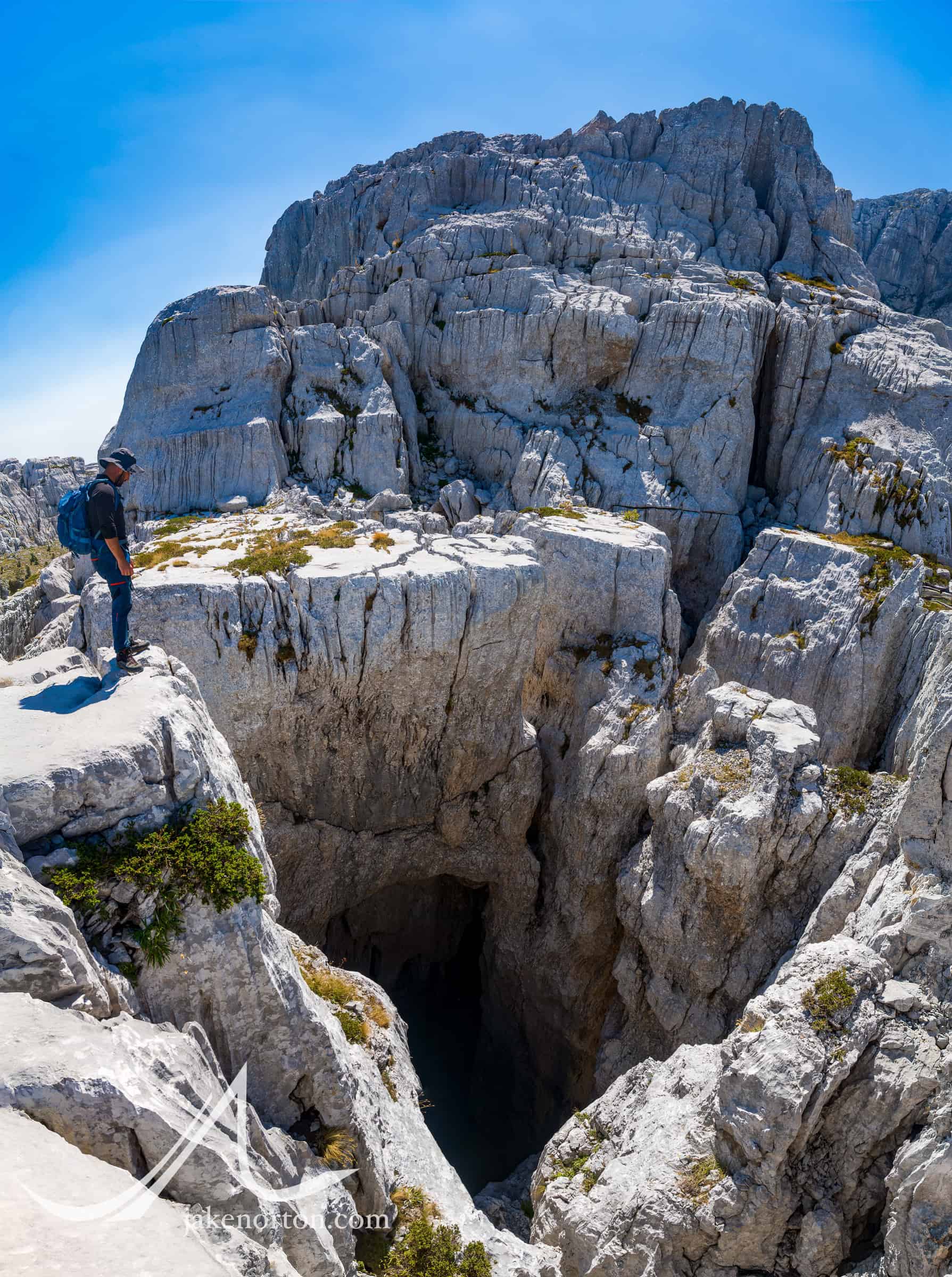
A chasm in the karst on Maganik, Montenegro. Sometimes the bridges we need most are not yet built.
Susan Woodward, Balkan Tragedy: Chaos and Dissolution after the Cold War (Washington, DC: Brookings Institution, 1995), 228, quoted in Perunović, “Animosities in Yugoslavia.” ↩︎
Perunović, “Animosities in Yugoslavia,” citing Robert Hayden, Blueprints for a House Divided: The Constitutional Logic of the Yugoslav Conflicts (Ann Arbor: University of Michigan Press, 2003), and N. Beširević, “Ethnic Conflicts in the Former Yugoslavia as a Consequence of Nation-State Building,” Treatises and Documents 61 (2010): 42–61. ↩︎
Christopher Bennett, Yugoslavia’s Bloody Collapse: Causes, Course and Consequences (New York: NYU Press, 1995), quoted in Perunović, “Animosities in Yugoslavia.” ↩︎
From Andrić’s bridge at Višegrad - which has endured centuries of human inhumanity - to one of the deepest canyons in Europe where an engineer broke his own bridge to protect the people it connected. Part IV of my five-part series on bridges.