
Note: This is the second installment of a five-part series on bridges. Feel free to read below, but for the full story, please start at Part I: Two Bullets at the Latin Bridge
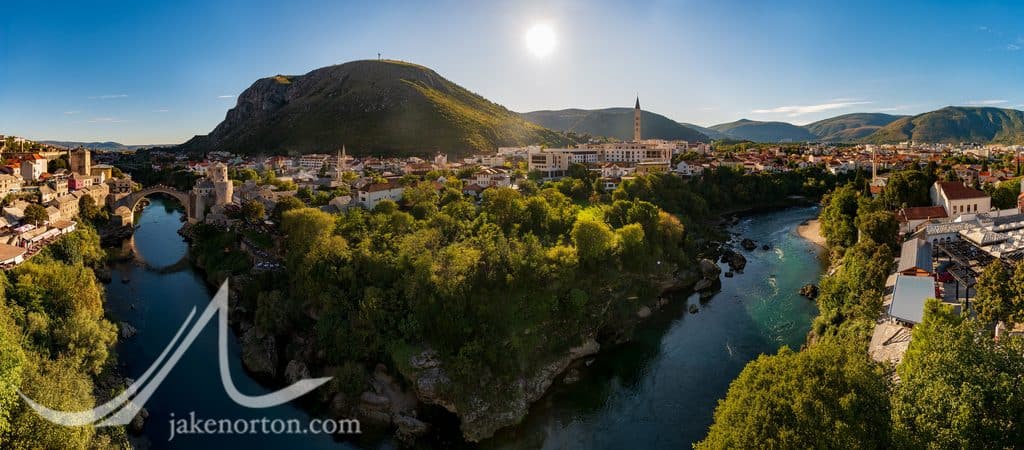
From the crest of the Stari Most, we gazed down to the Neretva some 80 feet below. It wasn’t what we remembered from seven years prior.
Motorboats plied the Neretva, ferrying tourists up and down incessantly to pose for photos. Sublime’s 40 Oz to Freedom blared from loudspeakers at a makeshift bar on the riverbank. Visitors from countless places nibbled cevapi, slurped beer, and licked ice cream in the numerous cafes, restaurants, and bars abutting the old bridge. And everyone, without fail, stopped at the crown of the bridge for a photo — landscape or selfie, or both — showing the iconic Mostar: a city split by a river, and joined by a bridge.
And, for much of five centuries, that was the case.
The Stari Most (Old Bridge) was commissioned in 1557 by the Ottoman emperor Süleyman the Magnificent to replace the terrifying, dilapidated wooden bridge that provided the only crossing at the time. Construction took some nine years. Completed in 1566, it was built by Mimar Hayruddin. It’s said Hayruddin was so worried his design would fail that he prepared his own funeral for the day the bridge was unveiled.
It didn’t fail: For 427 years, the bridge stood firm, its 98-foot length carrying Muslims and Catholics, Orthodox and Jews — the inhabitants of diverse Mostar — some 70-80 feet over the river across an engineering marvel, likely the widest human-made arch in the world at the time.
And not only did the Old Bridge allow for commerce, for buying, selling, trading, and moving goods from one place to another, but it enabled cultural commerce as well. For much of its history, Mostar was renowned for not only its diversity, but for the interweaving of that diversity. Here, different ethnicities lived next to each other, worked together, held platonic and romantic relationships. It was the oft-broken tapestry of the Balkans woven together on the banks of the Neretva.
The Bosnian war changed it all. It began in 1992 with Bosniaks and Croats fighting together in Mostar against the Bosnian Serbs and forces of the Yugoslav Army (JNA). Once the Serbs were expelled, allies became enemies and the Bosniaks and Croats turned on each other.
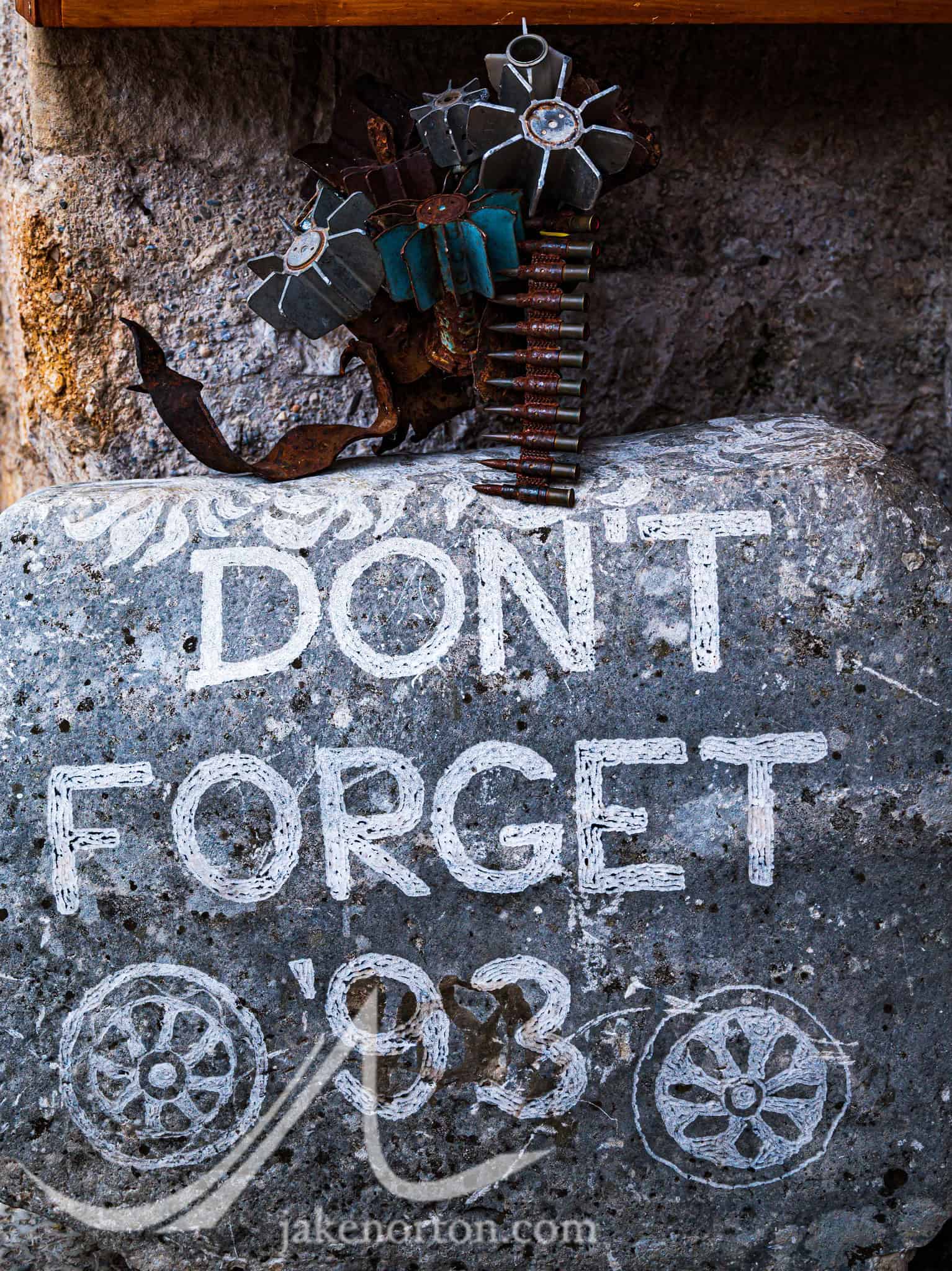
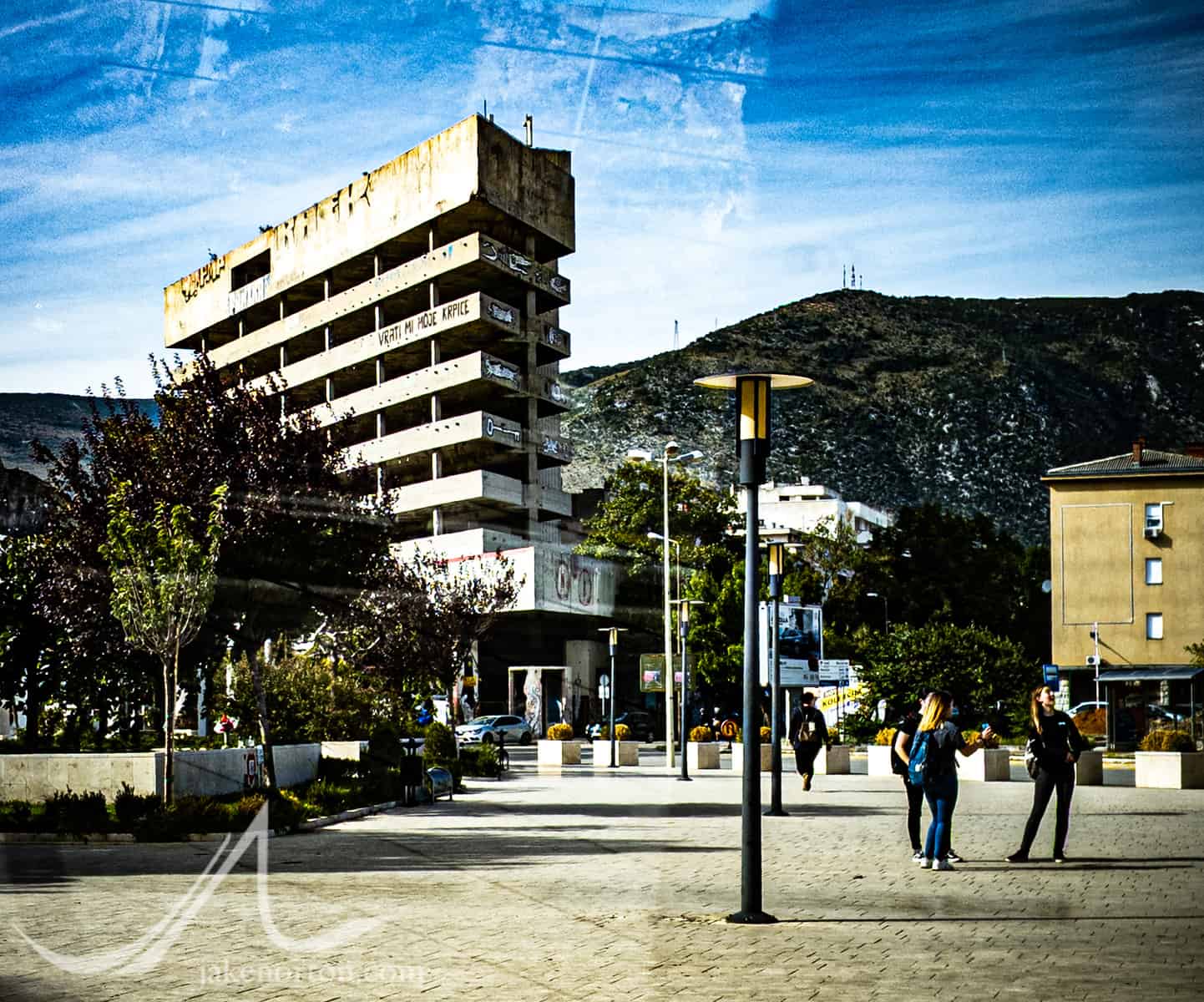
After months of vicious fighting, the Croatian Defence Council (HVO) under command of Slobodan Praljak began relentless shelling of the bridge, claiming it to be a legitimate military target (a claim upheld by the International Criminal Tribunal for the former Yugoslavia). On November 9, 1993, under heavy fire (see the recording below), the mighty bridge fell, the crown of Mostar collapsing into the Neretva.
With its collapse, the centuries-old interweaving of a city was broken, both symbolically and physically. (As poet Miša Marić told Radio Free Europe, before the war Mostar had six bridges over the Neretva; by November 1993, it had six bridges in the river.) The river became shorthand for the ethno-religious divide, Christians on the west and Muslims on the east; separation became the rule, and centuries of largely peaceful coexistence, inter-ethnic relationships and marriage ceased in a moment.
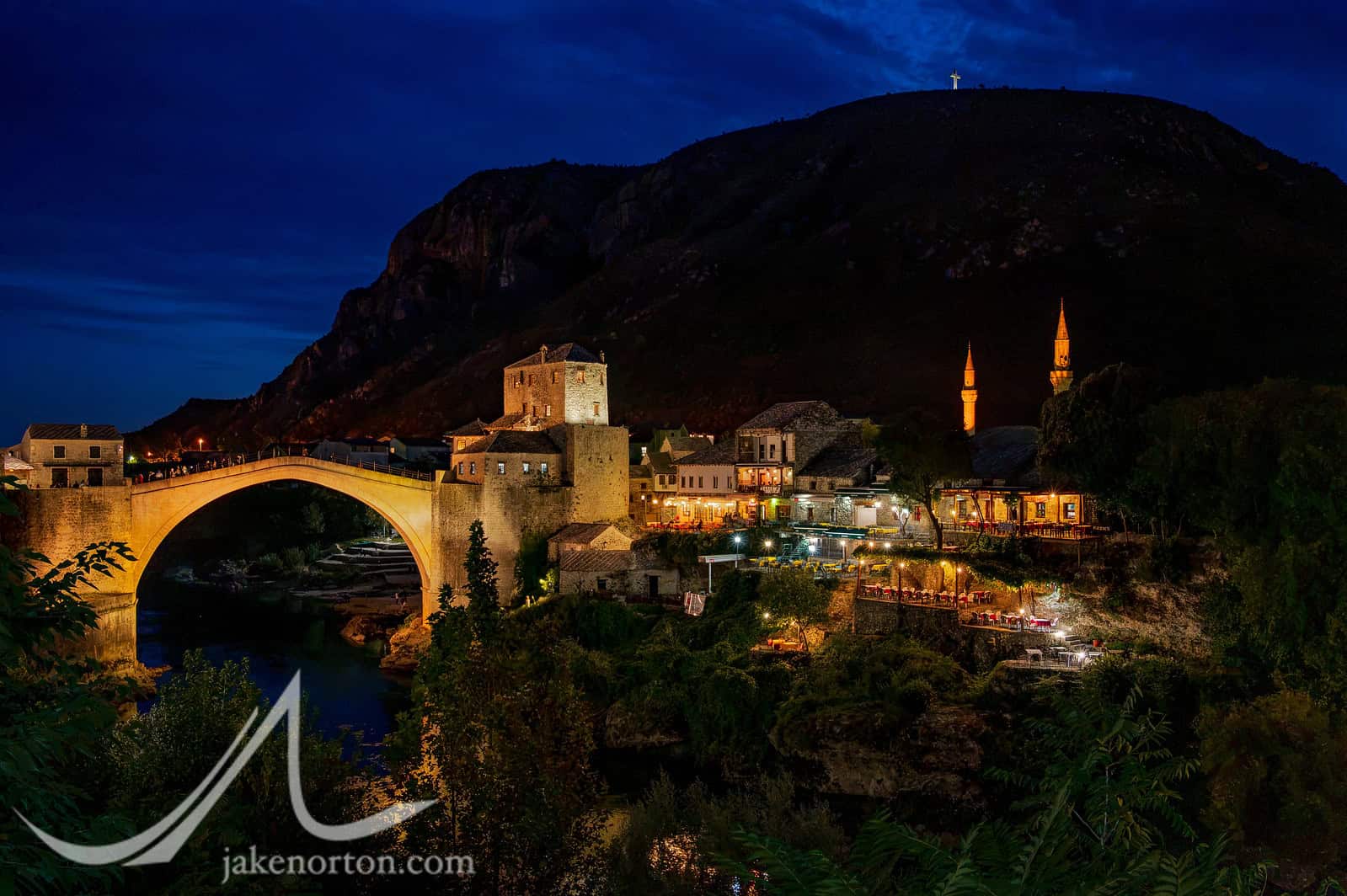
Stari Most reopened in 2004 following a painstaking reconstruction. Remnants of the original bridge were pulled from the depths of the Neretva, studied, and modeled; new blocks were then cut from the same local tenelija limestone and set in place, recreating the original arch and reconnecting the town.
Sadly, while the physical connection is rebuilt, the emotional division persists. Schools share buildings but teach separate curricula, one for Croats, one for Bosniaks. Towering steeples and crosses dominate the western skyline, minarets and songs of the muezzin the east. The division is so stark that in 2015 a Croat high schooler named Ante told Radio Free Europe’s Perspektiva that he’d never crossed the Old Bridge because, simply, “I’m afraid.” Soon after, he drummed up the courage and decided to make the big journey across the river. His reaction? “Everything is normal, I didn't think I was different from other people.”
Stari Most is back, with Instagram photos galore to tell of its beauty. But its purpose? Its stitching together of a community? Slowly, painfully, the scars of division are being healed, one footstep at a time. But for many in Mostar, the bridge’s purpose remains deep under the green waters of the Neretva.
Next: Srebrenica: Horror and Hope




Hi Jake,
Another beautiful informative piece of writing, of a location I am ( or was thanks to you) unaware of. It really hurts to see the division of peoples, be it there or in Belfast or ( sadly) here in the USA. You’d think there’d be a lesson to be learned, but it sounds like most don’t know the true history and merely want a photo op moment and to slurp (your word lol) a beer. I’d hate all those new places, except they offer a certain peace of place, and maybe offers healing that is much needed.
Thank you my friend for a beautiful reflection on history and the future hopefully forged with peace not sword
Cheers
-Barb
Hi again, Barb,
First off, thanks for reading and commenting - it really means a lot! And, thanks for your thoughts, always heartfelt and insightful. I agree 100% that we need, desperately, to read, digest, and come to terms with history in a real and meaningful way, and then to keep our bridges built, strong, open for all, connecting all. There's some interesting bits about that in today's post - Bridges, Part IV: Višegrad & Tara - as well as yesterday's, which is a hard one - Bridges, Part III: Srebrenica, Horror and Hope.
Anyway, thanks as always, and I hope you are doing well during these times!