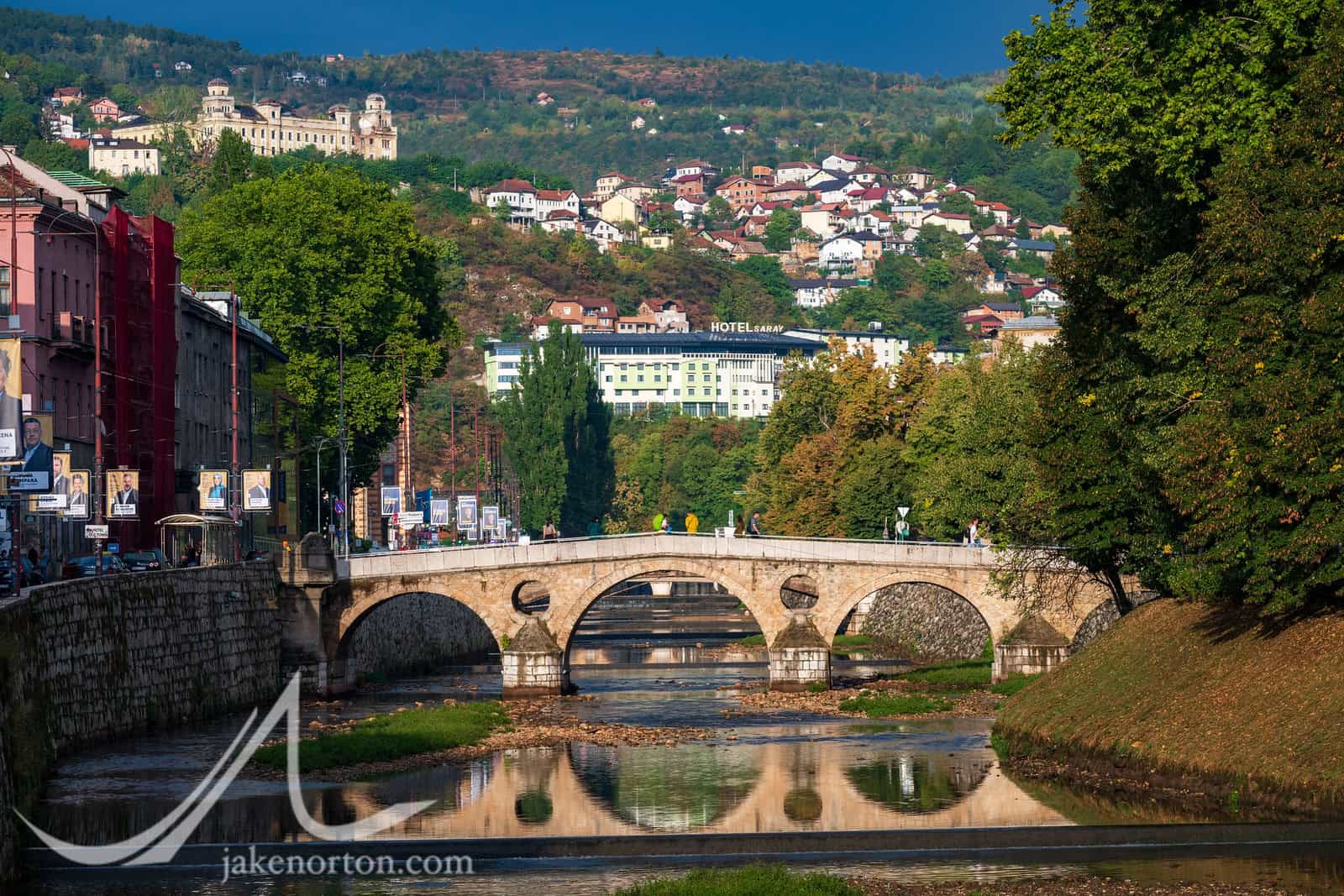
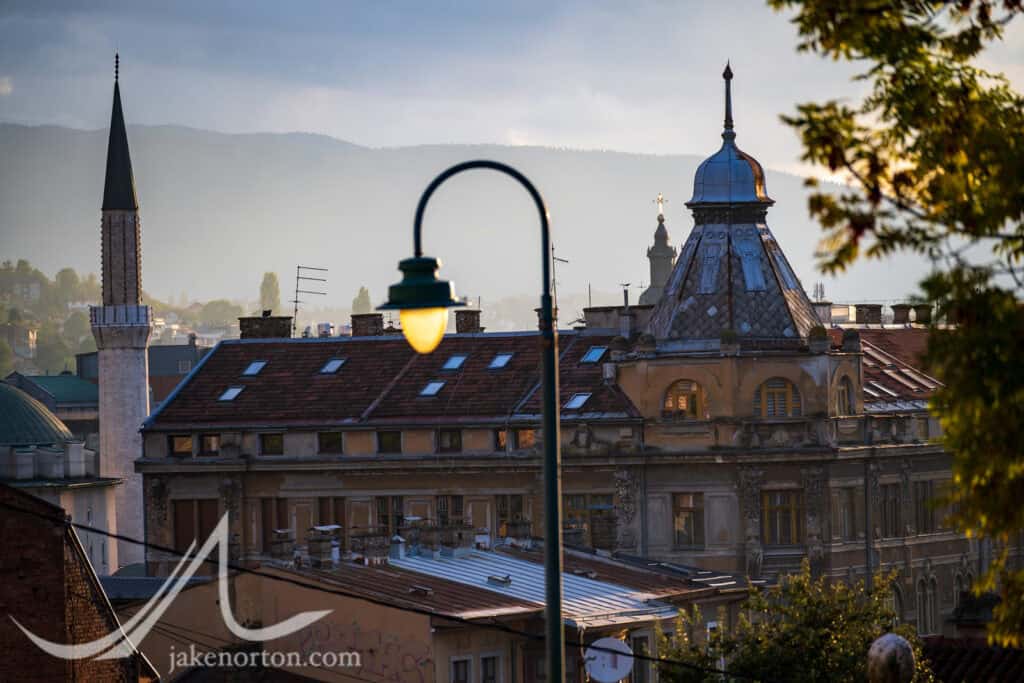
The Western Balkans are, justifiably, known for many things. Jagged peaks spawning crystalline blue-green rivers running to perfect beaches on the Adriatic; historic houses of worship dating back centuries, connections to the divine for Catholics, Orthodox, Muslims, and Jews; rich cuisine, a gustatory amalgam of east and west. The list goes on.
But for me, it’s the bridges. Graceful arcs, mostly from the Ottoman era, crossing small streams and raging rivers, spanning canyons and connecting cities and peoples and cultures. The bridges of the Western Balkans are impressive in and of themselves, but what strikes me most is their subtle symbolism, the power they’ve held — and continue to hold, physically and psychologically — as tools of unification and division, community and disunity, through the ages.
I spent September in the region with my son, traveling through Bosnia and Herzegovina, Montenegro, Kosovo, and North Macedonia, ostensibly homeschooling him and simultaneously both of us being schooled by the region, its culture and history and its bridges.
As we close in on Election Day, in a time of ever-increasing division in our nation, our society, here in the United States (and, dare I say, our world), the idea of bridges has been ever-present for me. The need to build them, nurture them, maintain and care for them, and resist the temptation in each of us to shatter delicate arches and critical supports for our own divisive aims.
So, a five-part series of Thursday Thoughts, Thursday or not, coming in rapid succession (it’s been a while, after all), about bridges, inspired by the Western Balkans and the works of Ivo Andrić in general, and The Bridge on the Drina (on Archive.org) and Bridges specifically.
I could almost smell the gunpowder, hear the crack of shots ringing out, 112 years later.
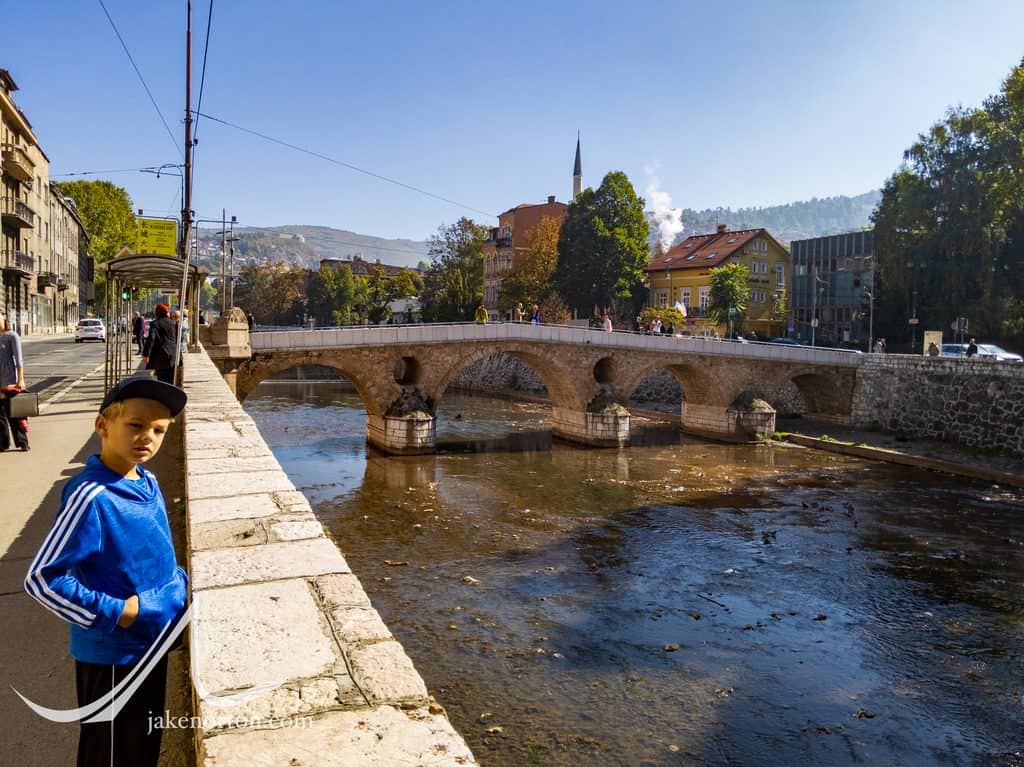
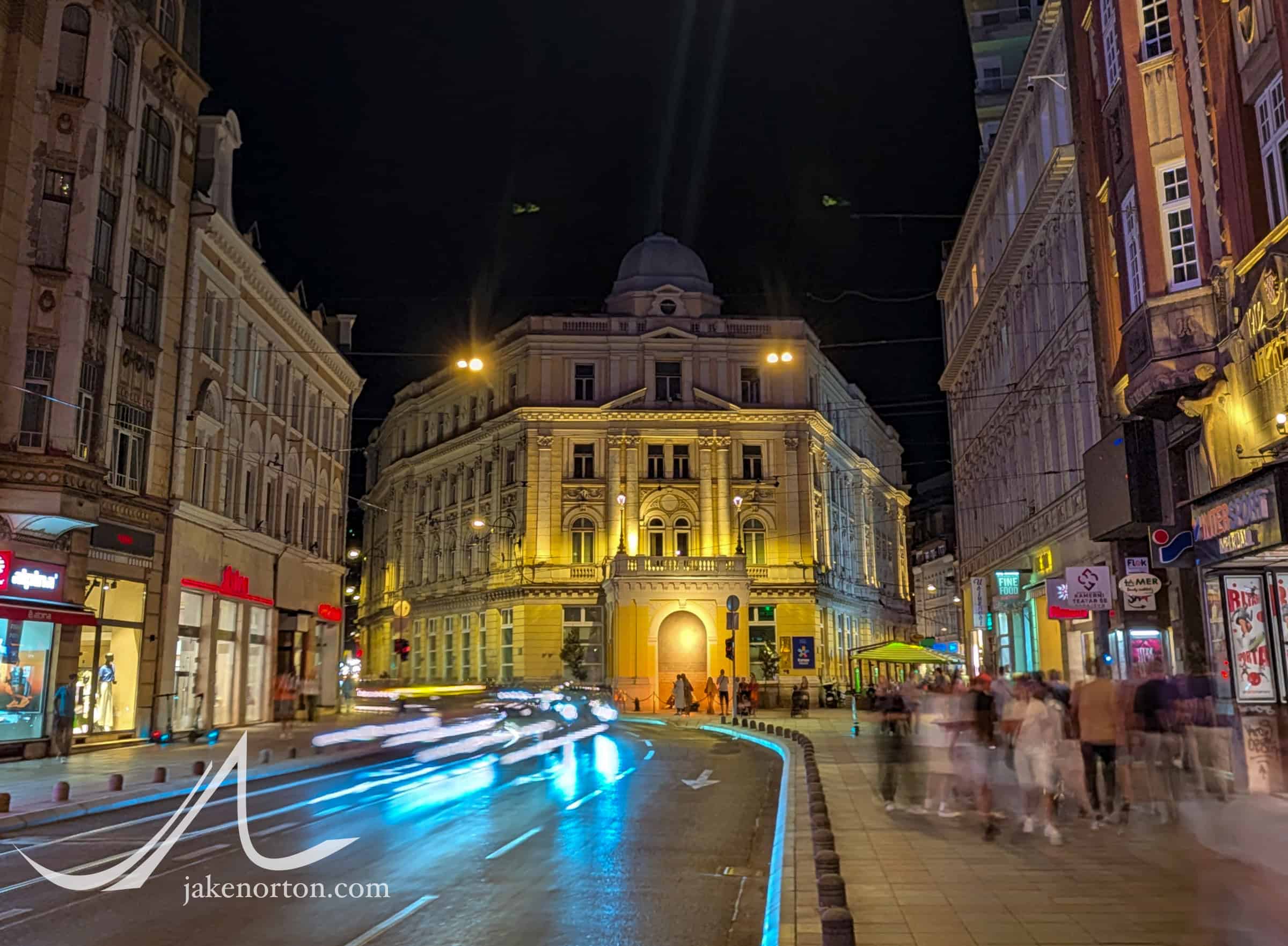
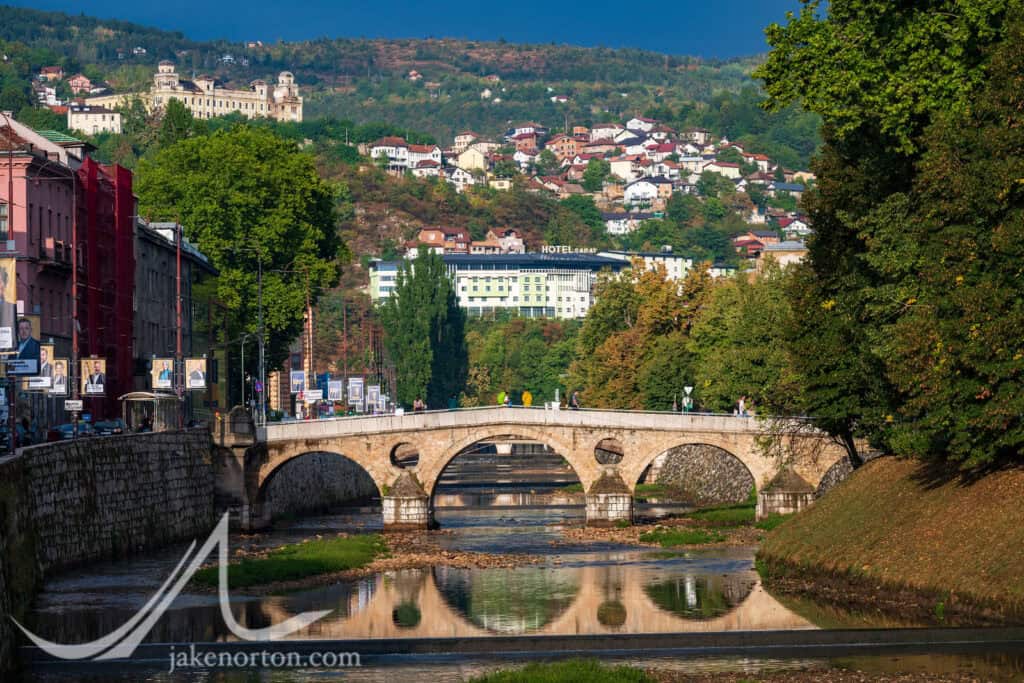
My son and I stood at the edge of the Latin Bridge in Sarajevo, Bosnia and Herzegovina. An Ottoman beauty first built in the 16th century (rebuilt in 1798 after a devastating 1791 flood), its four delicate stone arches span the Miljacka River and have, for centuries, allowed denizens of the city — Bosniak, Croat, and Serb; Muslim and Jew, Catholic and Orthodox — easy travel through this historically complex city known as the “Jerusalem of Europe.” Within a third of a mile of the bridge you can reach four historic houses of worship: the Gazi Husrev-beg Mosque, the Sacred Heart Cathedral, the Old Orthodox Church (Church of the Holy Archangels Michael and Gabriel), and the Old Sephardic Synagogue (Il Kal Grande).
“So, what happened here?” I asked my son in a teacherly way, homeschooling on the road as we were.
“This is where Gavrilo Princip assassinated Archduke Franz Ferdinand,” he replied, his knack for history always impressing me. “He was kind of an early Serb nationalist with support from the Black Hand, and his killing of the Archduke upended the whole world. It’s insane to be standing right here!”
He was spot on. June 28, 1914: Princip fired two shots, killing the Archduke and his wife, Sophie. Within hours, anti-Serb rioting spread across Sarajevo. By the 29th, it had spread as far as Zagreb and Dubrovnik, with numerous Serb houses, schools, and businesses destroyed. Austria-Hungary would go on to sentence 460 prominent Serbs to death and imprison or expel 5,500 more.
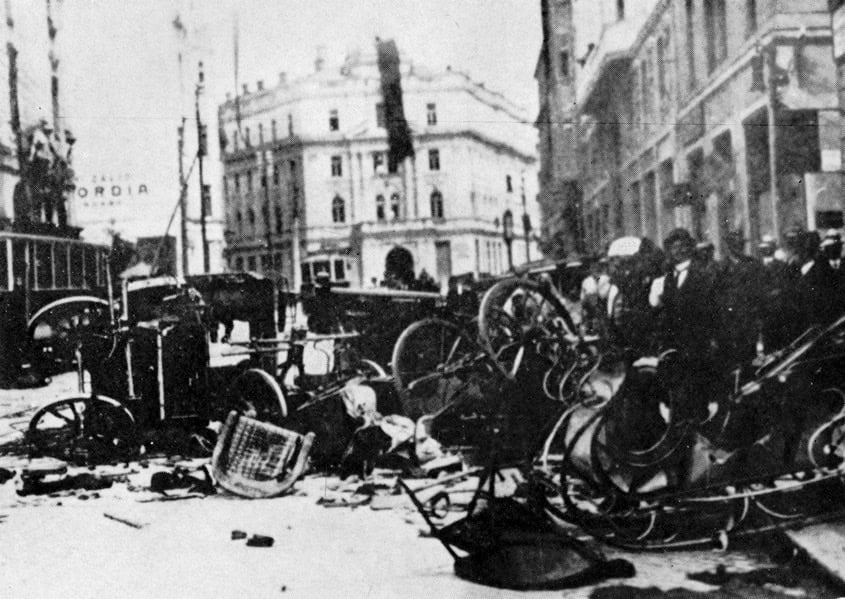
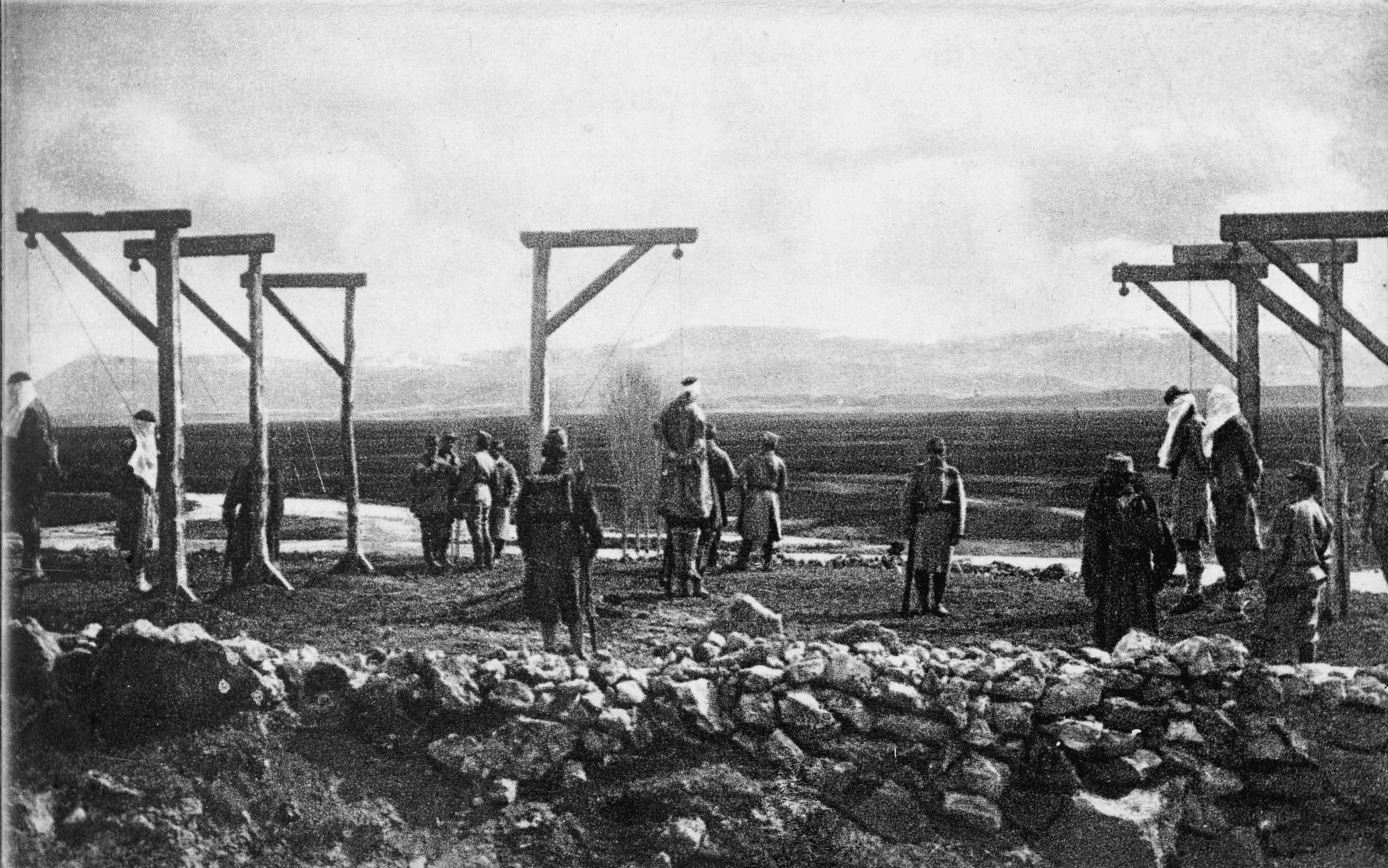
Nobel Prize-winning author Ivo Andrić — who lived through it, knew Princip’s circle well, and was himself one of the imprisoned — later wrote about those days in his boyhood home of Višegrad:
The people were divided into the persecuted and those who persecuted them.
- Ivo Andrić, The Bridge on the Drina, p.282
One month later, the contagion had spread catastrophically: Austria-Hungary declared war on Serbia. Russia came to the Serbs’ defense. Germany declared war on Russia and France and soon invaded Belgium, triggering the entrance of the United Kingdom into the fray. According to the New York weekly The Independent on August 10, 1914, the assassination was a "deplorable but relatively insignificant event" that nonetheless caused "millions of men in Europe [to take] up arms with intent to slaughter each other,” noting that:
Most of the people concerned in the present conflict have neither racial antagonism nor economic interests as an excuse for enmity… But now the guns are loaded and those who bear them have nothing to say about whom they shall shoot.
Two bullets. Two bullets, fired by a Bosnian Serb for South Slavic, or Yugoslav, unity and freedom from Austro-Hungarian rule, set off a conflict that took the lives of 15 to 22 million people through combat, war crimes, and genocide.
The Latin Bridge still stood, but what it had enabled for centuries — the peaceful, safe passage of a diverse populace — was shattered.
Coming next: Stari Most — the rebuilt bridge that’s still broken