Note: This is the fourth installment of a five-part series on bridges. Feel free to read below, but for the full story, please read Part I: Two Bullets at the Latin Bridge, Part II: Stari Most — Rebuilt but Still Broken, and Part III: Srebrenica, Horror and Hope
We were tired. Not physically so much as mentally, spiritually, emotionally. Seeing, feeling, digesting the tragedy of Srebrenica took its toll on both Ryrie and me.
Our initial plan was to head to Višegrad, Ivo Andrić’s boyhood town, and the Mehmed Paša Sokolović Bridge, the main character in his epic novel The Bridge on the Drina. But while beautiful, historic, important, Višegrad is also a place of darkness, tragedy, horror, the unleashing of the wild beasts lurking somewhere, perhaps, in us all.
So, a full stop became a pit stop — but an important one.
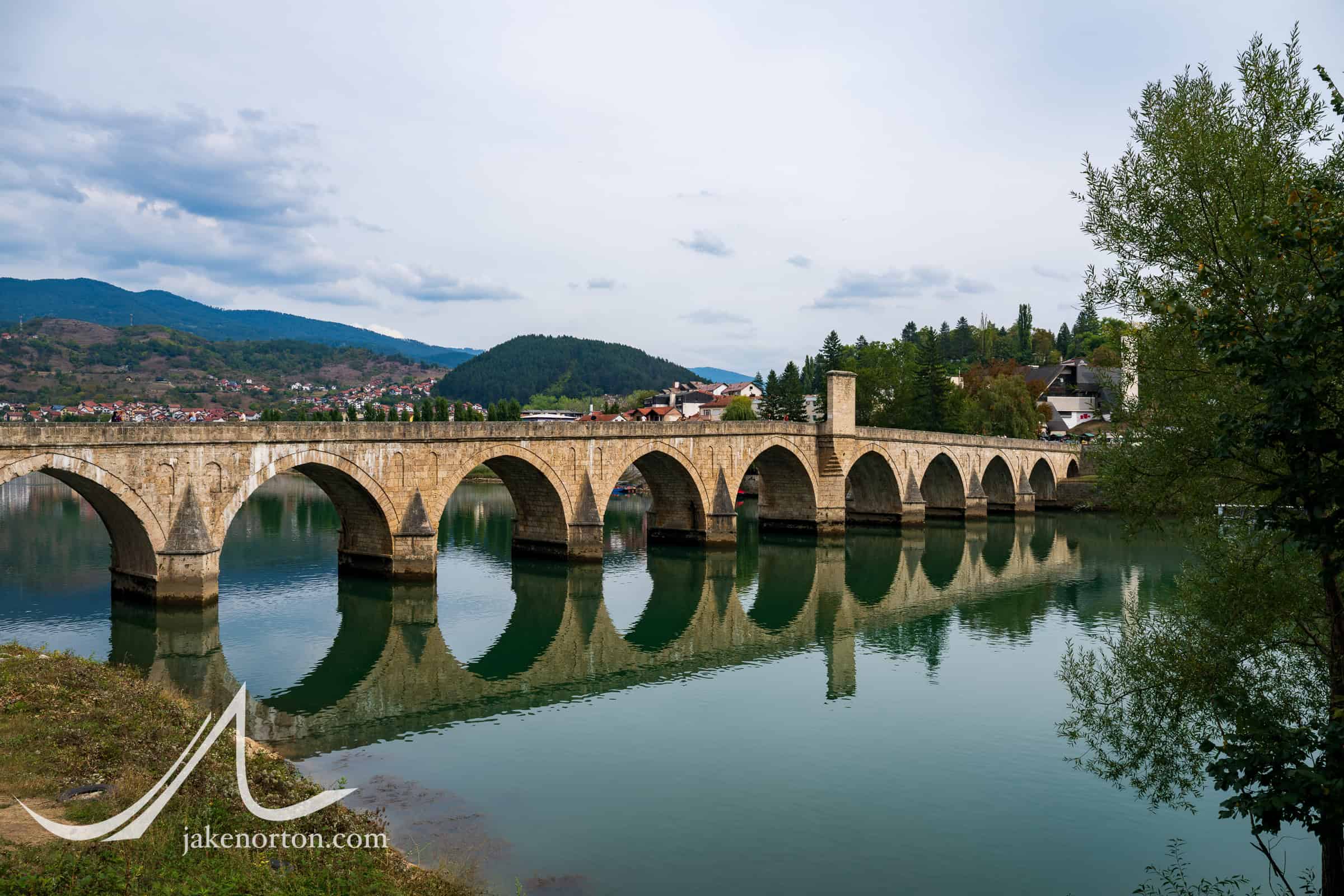
Gazing at the bridge from the banks of the Drina, Ryrie and I marveled at its majesty, its solidity. Together we strolled up its gentle rise to the kapija, the meeting place at its center, watching the mellow flow of the river below, fishermen downstream catching dinner and locals crossing bank to bank. 2026 could have been 1626 for all the bridge cared.
The bridge is a stunning one, eleven graceful arches running nearly 600 feet over the deep green flow of the Drina. Built in the 16th century by order of the Grand Vizier Mehmed Paša Sokolović, the bridge has a history as complex as he who envisioned it. Sokolović was born to a Serbian Orthodox family in the village of Sokolovići, not far from Višegrad. As a young boy, he was taken by the Ottomans as a “blood tax” to become a “new soldier,” or janissary, in the Sultan’s army. Sokolović rose through the ranks, eventually becoming Grand Vizier, but never forgetting his roots: he commissioned the construction of the Višegrad bridge in 1571 to bring trade and prosperity to his hometown; it was completed in 1577 by the architect Mimar Sinan (whose student, Mimar Hayruddin, built the Stari Most).
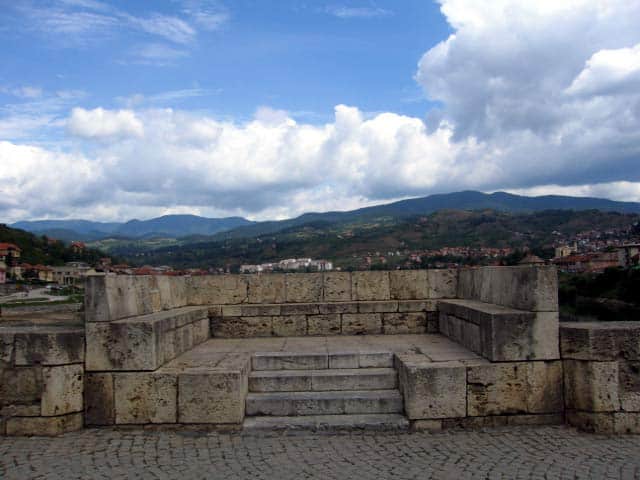
As for the bridge, for much of four and a half centuries it stood stalwart, serving the purpose Sokolović hoped: a means of passage from bank to bank for people and goods and ideas and commerce. But more than that, it also served as a place of connection. In the center of the bridge, at its midpoint, the bridge widens considerably, making room for the elegant kapija (or kapia) with built-in limestone sofas, once lined with carpets and cushions. The kapija was a space to sit, rest, chat, sip coffee, and connect across social, ethnic, and religious lines.
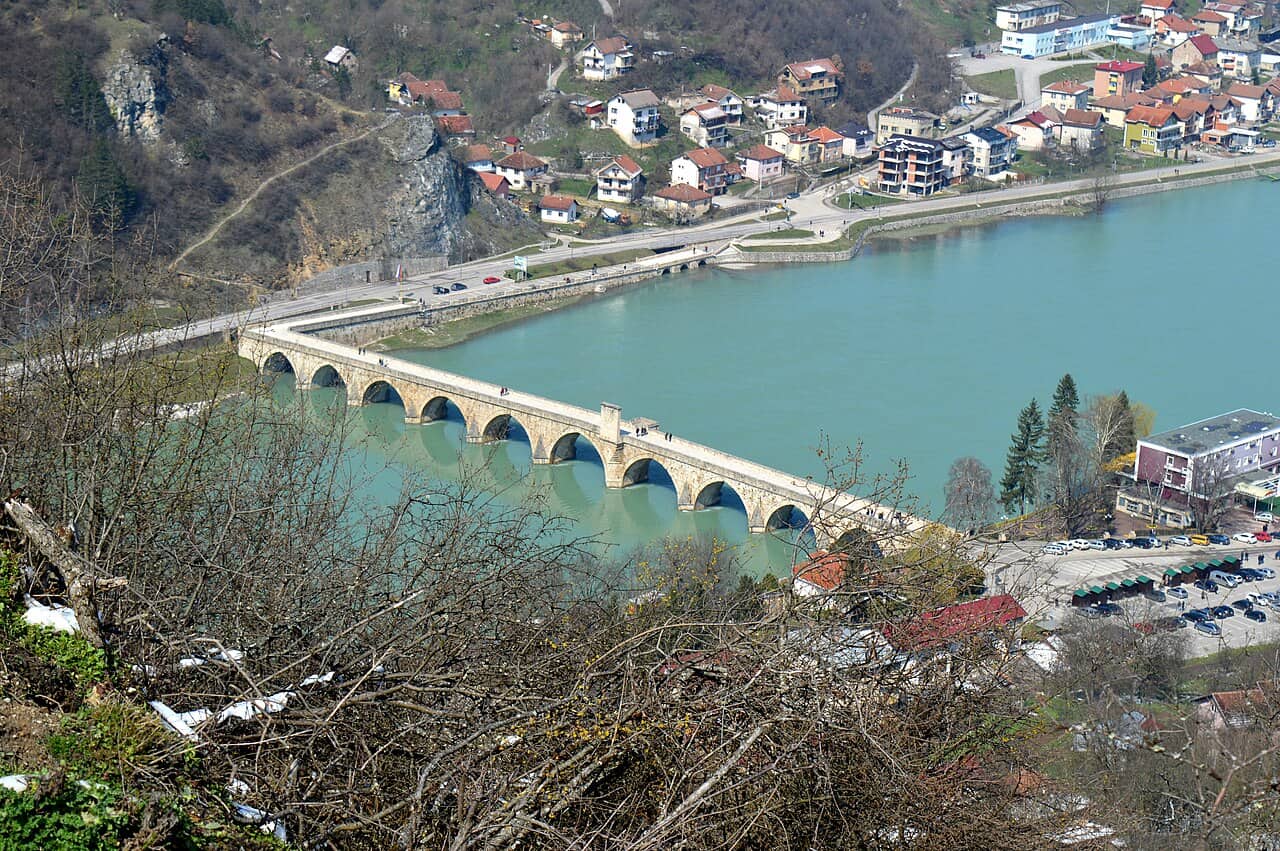
And yet the bridge was, inevitably perhaps, also a place of division. Andrić tells the fictional story of Radisav, a kuluk (forced labor) peasant who tries to sabotage construction of the bridge, and pays for it by being impaled alive on a spike; while fiction, it is rooted in history: forced laborers — mostly Orthodox peasants — were indeed used (and abused) in the bridge construction, and impalement was a known punishment under Ottoman rule. And the violence didn’t end with the Ottomans. Three of the bridge’s arches were destroyed in World War I, five damaged in World War II.
And the Bosnian war bore witness to the worst. Bosnian Serb paramilitaries, including Milan Lukić’s men, executed many Bosniaks on the bridge, tossing their bodies into the Drina. They went on to kill many more through beatings, torture, and arson (the Pionirska Street and Bikavac fires) throughout Višegrad. The bridge which connected became a potent symbol of division.
And still, indifferent to human inhumanity, the bridge stood, a reminder to all that we have a choice: to unite or divide, to cross and meet and join at the kapija, or to remain fearful, isolated, on our side of the river. Again, to Andrić:
“…the memory of what had taken place and the consciousness that what has once been can be again; there remained too hope, a senseless hope, that great asset of the downtrodden.”
— Ivo Andrić, The Bridge on the Drina, page 84
From Višegrad, Ryrie and I followed the Drina some sixty miles upstream, into the mountains, to Šćepan Polje. It’s here, on the border with Montenegro, that the Drina is born. Not born as a mountain spring, but as a joining, a melding, a confluence of two distinct rivers: the Piva and the Tara.
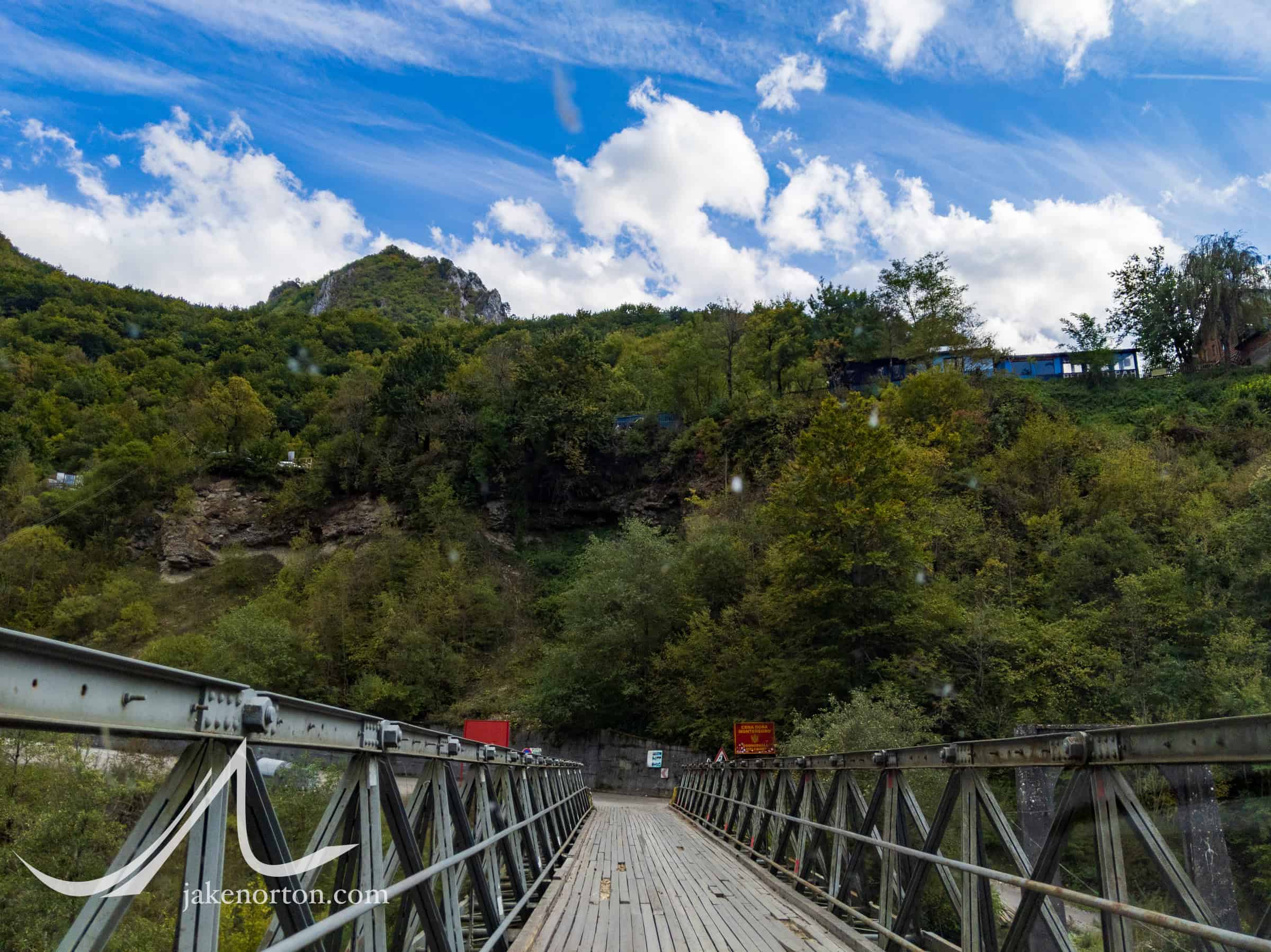
With border formalities finished quickly, we crossed the rickety bridge into Montenegro and followed the narrow road clinging to the edge of Piva Canyon. Not long after, a sharp left took us north on a ribbon of pavement through impossible tunnels and wild mountains to the edge of Durmitor National Park and on to Žabljak, a mountain town tucked between high massifs and the deep canyon of Tara. Enthralled by the scenery, we stopped again and again for photos — and simply to marvel.
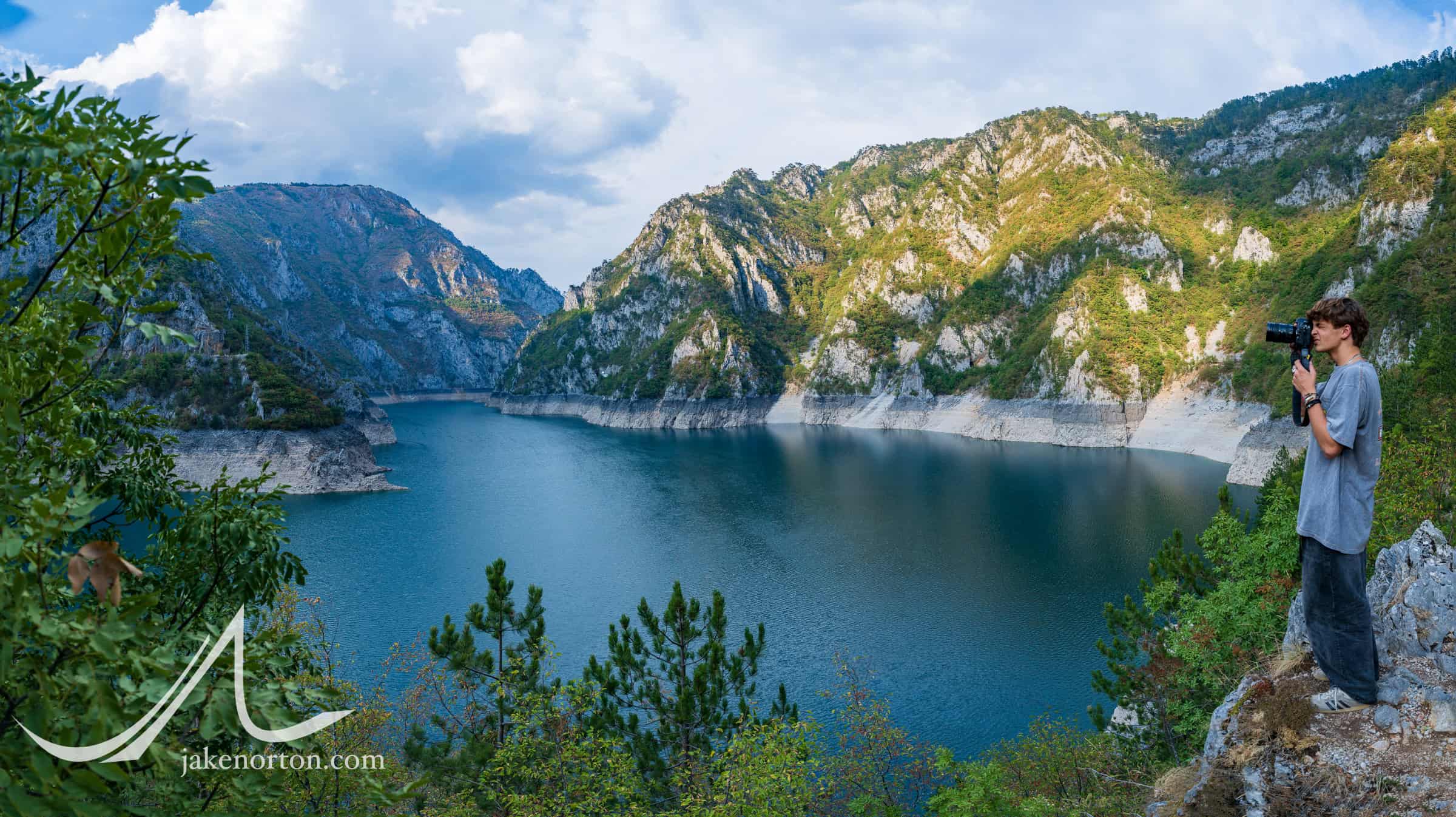
A few days later — with friends who happened to be visiting from Wyoming — we continued to a place which, after six trips and many months in the region, I had somehow not yet visited: Tara Canyon and the Đurđevića Tara Bridge.
It certainly doesn’t have the grace, the sinuous lines and sculpted bastions, of its Ottoman-era counterparts. But the Đurđevića Tara Bridge is still a sight to behold. Built before brutalism, it nonetheless looks similar, a utilitarian design of concrete and steel for a utilitarian purpose: allowing passage across the great Tara Gorge of the then Kingdom of Yugoslavia. Designed by Mijat Trojanović, the bridge was constructed between 1937 and 1940 and runs 1,198 feet across five arches. The road sits a dizzying 564 feet above the Tara River, and the bridge allows simple crossing of one of Europe’s deepest canyons.
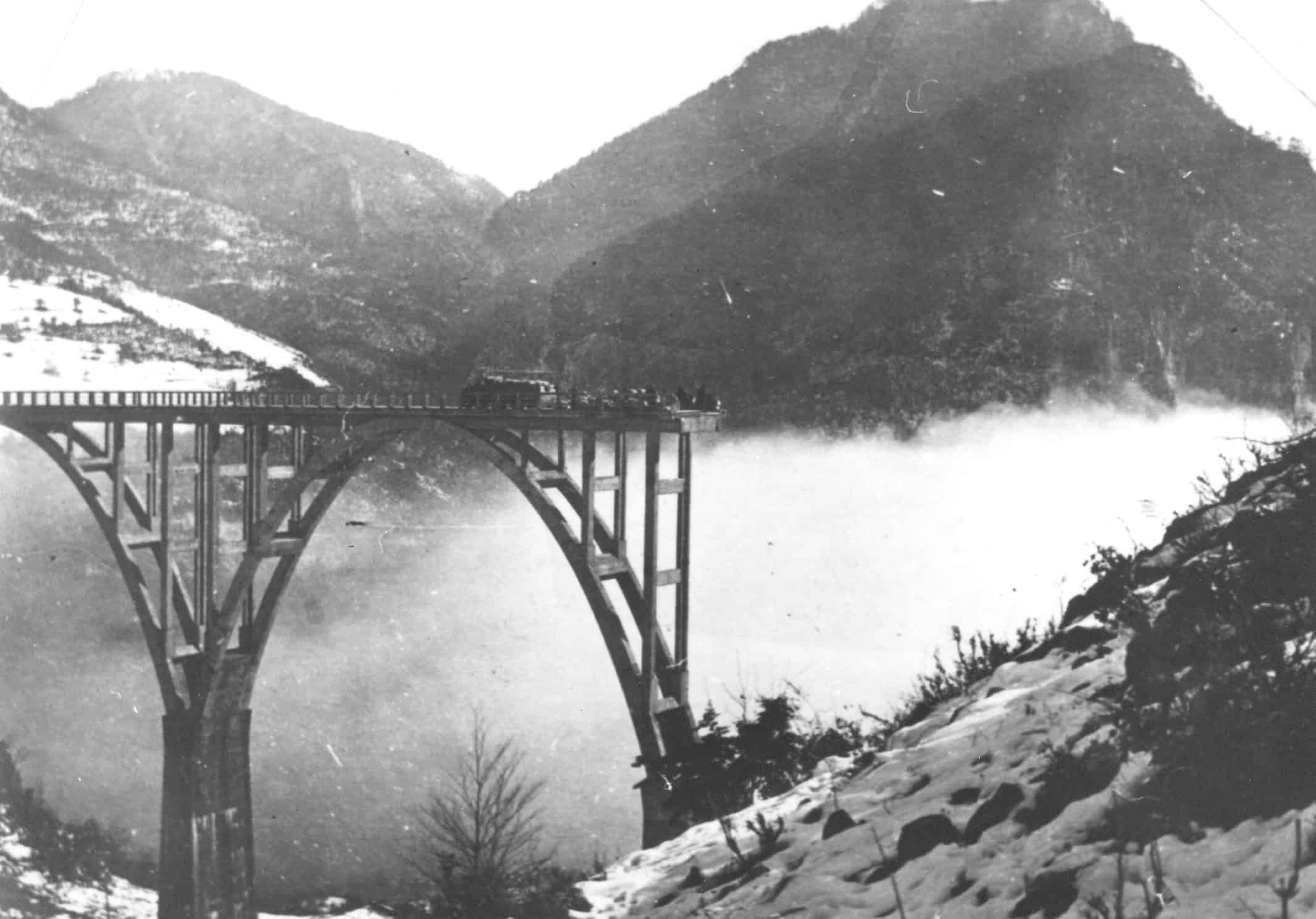
Like all Balkan bridges, though, the Đurđevića’s history is fraught. Not long after its completion, Nazi Germany invaded Yugoslavia, and control of the Tara region — and much of modern Montenegro — was handed over to fascist Italy. By May 1942, Italian troops were marching toward the Tara; much was at stake for the fledgling, guerrilla Partisan army — stop the advancing soldiers, or succumb to the Axis invasion. The only solution: stop the advance by disabling the bridge.
From here.
Of course, this was an agonizing choice: the Đurđevića was a pride of the Kingdom, a feat of engineering, and would be needed when the war ended for its original purpose: connecting people and place. So, the Partisans turned to Lazar Jauković, one of the original engineers of the bridge, and one who knew precisely how to disable it so it could be rebuilt with as little effort as possible. Jauković did just that; his knowledge of the bridge told him to destroy only the southwesternmost arch. That would stop the Italian advance while still being reparable later. The plan went ahead, and the Đurđevića was disabled.
In a tragic twist, not only was Jauković forced to destroy one of his greatest creations, but he was later captured by the Italians. Like the executioners in Andrić’s novel, and those still to come at Višegrad, they chose to mete out punishment on the bridge itself, executing Jauković there by firing squad.
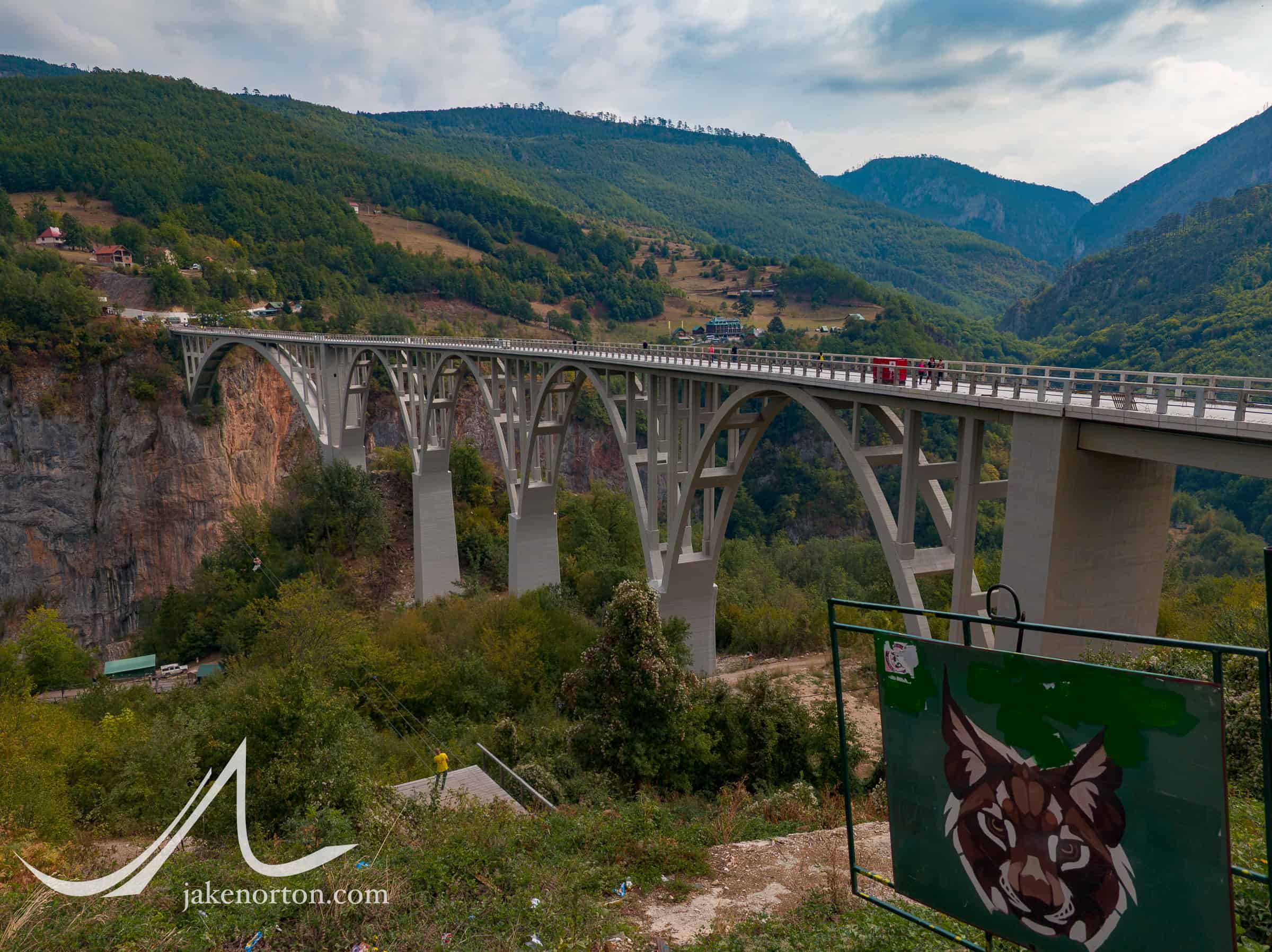
But Jauković’s memory and the bridge he helped build weren’t destroyed, at least not in full. The bridge’s broken arch was rebuilt in 1946, restoring connection across the great Tara divide. And, to honor his memory and his sacrifice, a bust of Jauković and memorial plaque sit today at the entrance to the bridge, noting the genius and courage of the engineer who helped build a bridge of connection, then broke it to protect those it once connected — knowing full well it could be restored again.
At the end of The Bridge on the Drina, Andrić’s bridge lies shattered, a victim of the violence of World War I. His character Alihodja, a Muslim shopkeeper, sees the broken bridge, noting that the “broken arches yawned painfully towards one another across the break.” He’s heartbroken, dismayed by how anyone could destroy something so beautiful, so essential, so eternal. Seemingly knowing what was to come decades later upstream on the Tara, Alihodja consoles himself in his final, dying moments:
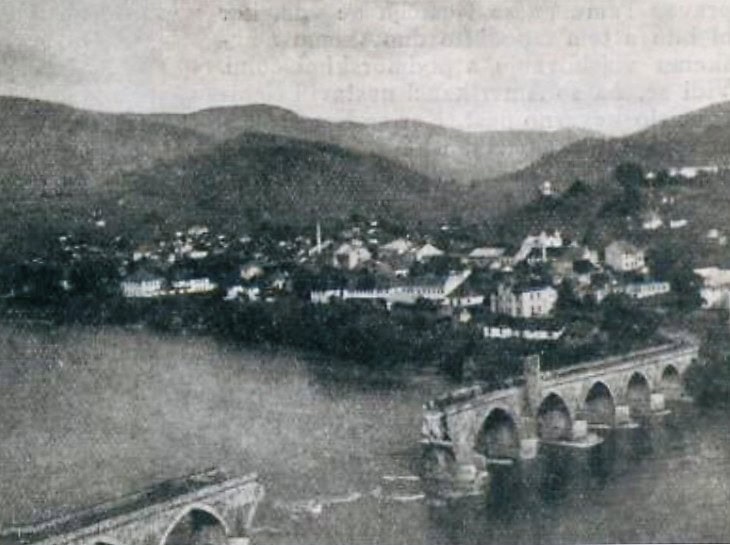
From here.
If they destroy here, then somewhere else someone else is building. Surely there are still peaceful countries and men of good sense who know of God’s love? … But one thing could not happen; it could not be that great and wise men of exalted soul who would raise lasting buildings for the love of God, so that the world should be more beautiful and man live in it better and more easily, should everywhere and for all time vanish from this earth. Should they too vanish, it would mean that the love of God was extinguished and had disappeared from the world. That could not be.
— Ivo Andrić, The Bridge on the Drina, pages 313-314
Continue to Part V: The Crossing