
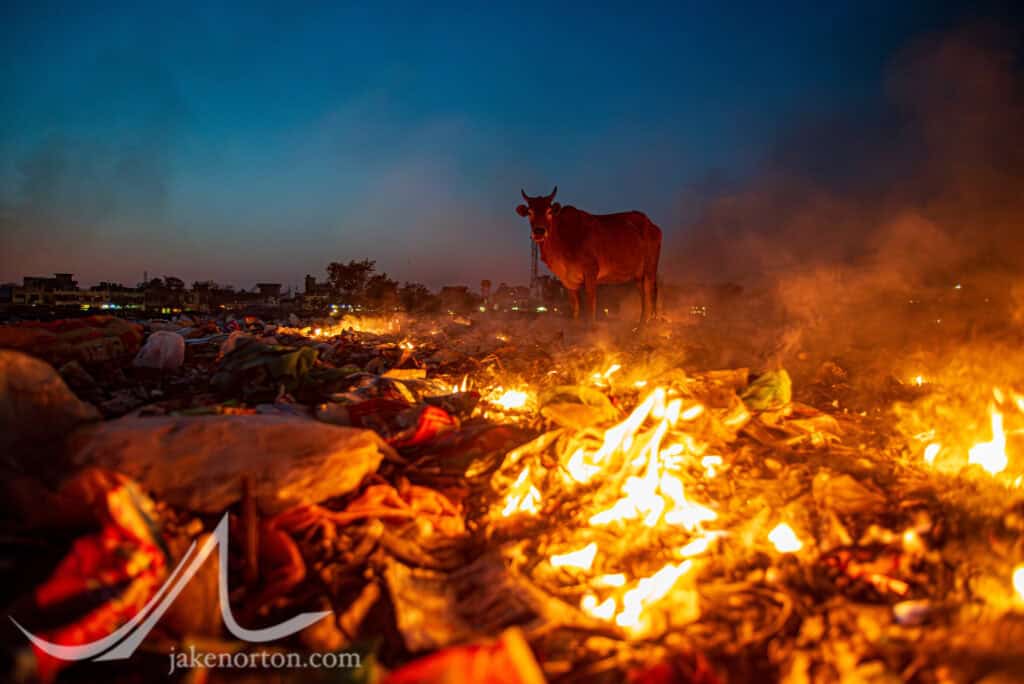
Years ago, I was wandering with Pete McBride through trash piles on the outskirts of Rishikesh, India. We were filming the final bits of our film Holy (un)Holy River, and had come to the local dump to document the effluvia seeping from it into the nearby, sacred Ganges River.
We knew what to expect: a toxic landscape, trash and plastic and chemicals and medical waste piled high, stretching far, stinking and rotting and polluting.
We didn’t know that we’d also find laughter.
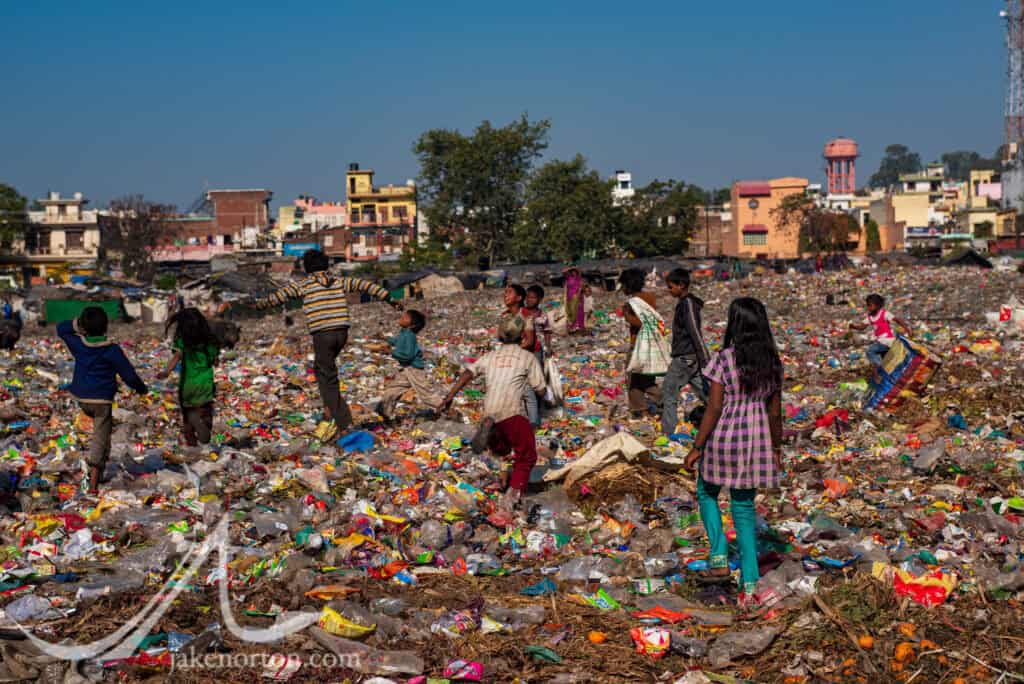
I heard it in the distance, over the rumble of a small tractor pushing gook around: joyous cackles audaciously out of place in this giant pile of trash. A hundred yards away I saw the culprits: a group of children running, playing, and working in the trash.
They were all Dalits - untouchables in the traditional Hindu caste system - and lived in ramshackle huts ringing the dump. They didn’t go to school, but instead worked here amongst the rubbish, picking through the discards of millions to find bits of recyclables to turn into desperately needed cash, maybe the occasional treasure - a forgotten ten rupee note, a shiny bangle inadvertently tossed away.
Known colloquially as ragpickers throughout the Subcontinent, life for these people - living and dying amongst the trash of others - must, I thought, be devoid of any and all joy, a life of abject struggle and dismality, not happiness to be found.
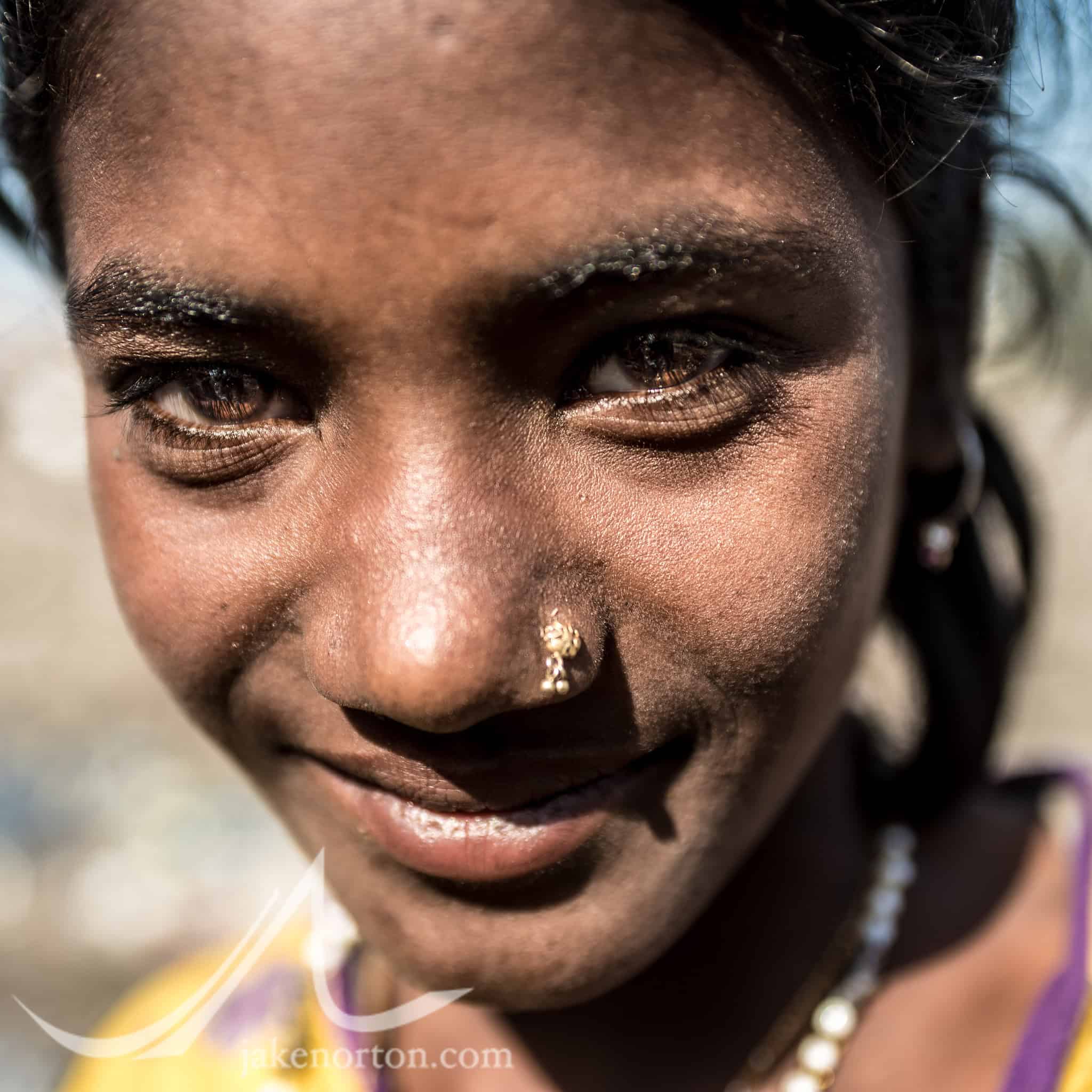
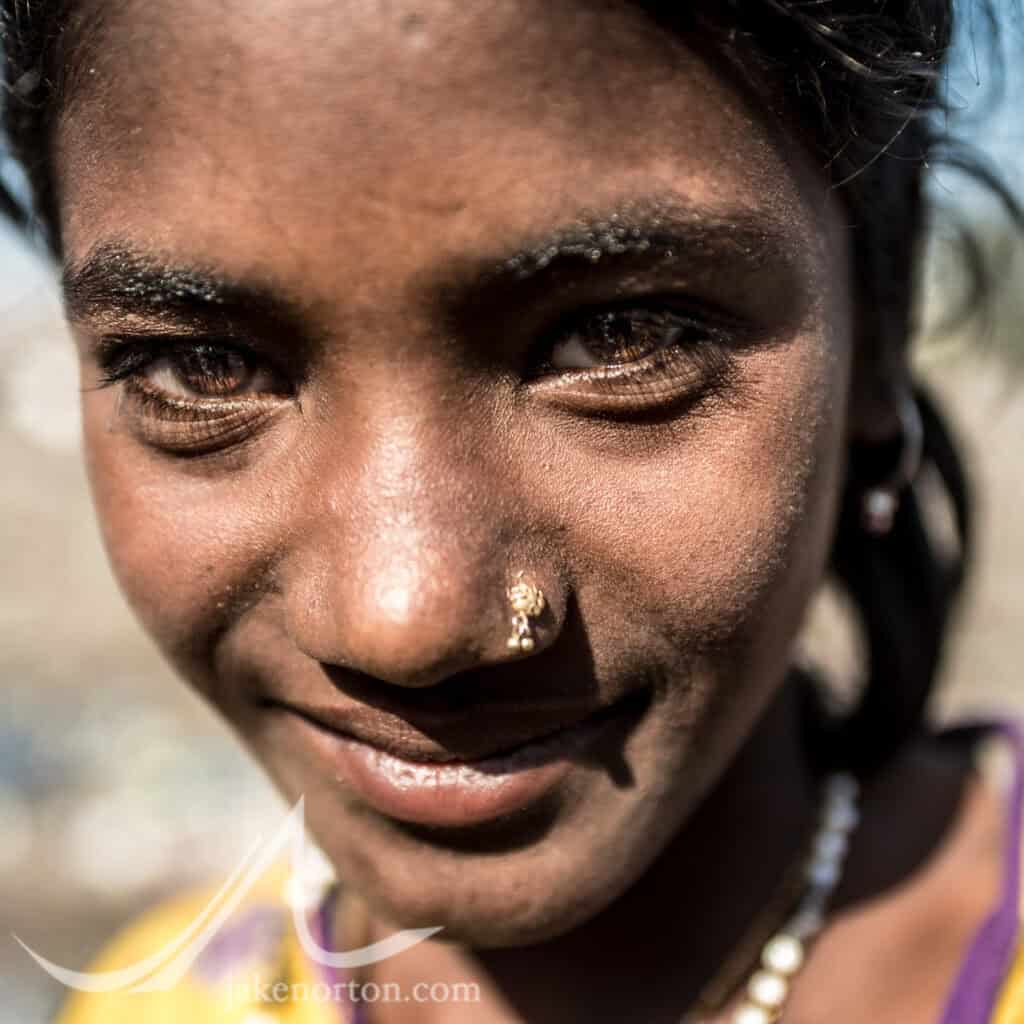
But then Jumila came running over, sprinting through the feditity in flip-flops and a bright shirt. Ten years old, all of them spent in and at the dump. And yet Jumila had a sparkle in her eye, a spring in her step, a joy in her being that belied the gravity around her.
“Hello sir!,” she said excitedly in near-perfect English. “I am Jumila. How are you today?”
“I’m fine, and you?” I asked. “And, you can call me Janak.” (My Nepali name, much easier than Jake.)
“I am fine, Jake,” she quickly replied, smiling widely. “We are collecting many good things today!”
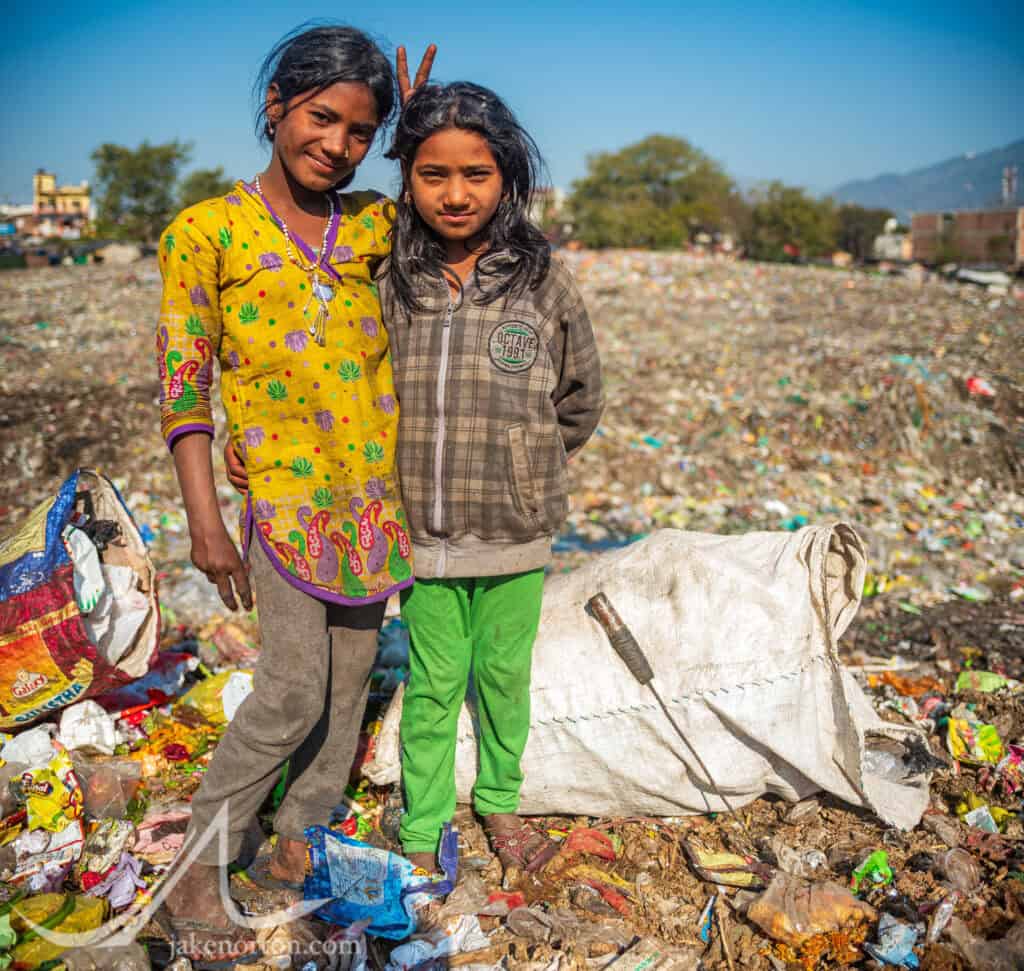
Her young friend came over, breathless, curious as well about the strange foreigners wandering through their land.
We spoke for a bit, my friend Madhav helping translate where my pathetic Hindi and Jumila’s limited English faltered. I heard of her life, her family (7 siblings), her school (none), her health (good - I am strong!). She and her cadre of a dozen children might make a few hundred rupees (a few dollars) on a good day, all of which goes to their families to eke out a living.
“But today I found this!” Jumila said in Hindi, pointing proudly to the beaded necklace around her neck. “Isn’t it beautiful? I’m very happy.”
I’m very happy.
The sentiment seemed incongruous here, in a dump, impossible even. But still, there it was. Happiness. Pleasure. Joy. And Jumila wasn’t alone; watching the kids play, run, laugh, I saw clearly that while their lives were anything but easy, their futures anything but promising, they had something so many of us in the “developed” world sorely lack: the ability to find joy even in the toughest of times, the bleakest of situations.
My daughter has been reflecting on this recently, having spent time this summer teaching at a poor school outside Livingstone, Zambia, filled with kids not unlike Jumila. Her experiences are becoming fodder for her college essay, and for her life. In reading through the former the other day, one simple passage caught my attention, blew me away:
“Joy doesn’t need life to be perfect.”
Jumila and her friends knew this, as did Lila’s students in Zambia. But somehow most of us, racing through the world, are ignorant of that truism, unable to find joy in the moment as we’re forever in pursuit of creating a joyous future.
I’m reminded of a beautiful passage by Anne Gilchrist reflecting on the words of Walt Whitman in Leaves of Grass:
I used to think it was great to disregard happiness, to press on to a high goal, careless, disdainful of it. But now I see that there is nothing so great as to be capable of happiness; to pluck it out of “each moment and whatever happens”; to find that one can ride as gay and buoyant on the angry, menacing, tumultuous waves of life as on those that glide and glitter under a clear sky; that it is not defeat and wretchedness which come out of the storm of adversity, but strength and calmness.
- Anne Gilchrist, A Woman's Estimate of Walt Whitman
So, a challenge to you, to me: This weekend - and every day forward - let’s try to find moments of joy in the tumult of our world, pluck it out of “each moment and whatever happens,” find a proverbial necklace in the trash heap and celebrate another moment here and now in this beautiful, challenging, hectic world.





I absolutely love this essay. It's always good to remind ourselves of how good we have it, and to find joy in the small things.
Thank you, Deborah! I'm with you - it's so easy to get caught in the half empty glass, seeing only what is missing rather than what is good. Thank you, and all the best!